Run Into the Sun: The Perfect Snack Drama — Deep Dive ⚠️ Spoilers
Is Run Into the Sun (선재 업고 튀어) a masterpiece? No. Is it the most enjoyable K-drama binge of 2024? Absolutely yes. Full spoiler breakdown.
⚠️ Full spoilers. Including the ending.
👉 This is Part 2 of a 2-part series.
✏️ Editor’s Note — An Honest Assessment
Let me say this clearly upfront.
Run Into the Sun is not My Mister. It is not Goblin. It does not leave a long echo. It does not rearrange something inside you after it ends.
What it is — and what it does extremely well — is keep you completely unable to stop watching.
This is a snack drama. A premium one. The kind where you finish an episode and immediately start the next without thinking about it. The curiosity engine runs from start to finish: what happens next, what happens next, what happens next.
There is craft in making that work. It is just a different kind of craft from what makes a drama great.
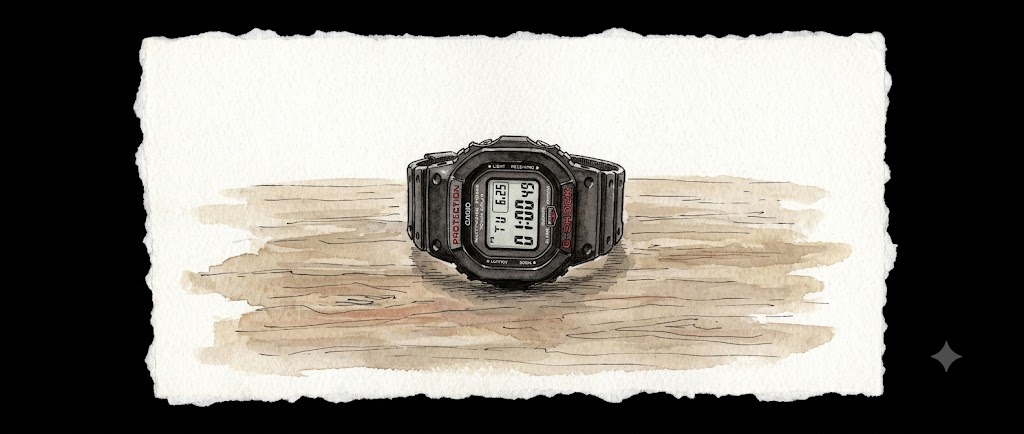
The time-slip mechanism — centered around Sun-jae’s watch — was a fresh touch. The watch as the trigger, the object that connects timelines, gave the device a specificity that most time-travel romances skip. And the fact that the story ends happily, after so many seemingly uncrossable obstacles, felt like a genuine relief rather than a cheap resolution.
That is enough. That is a good drama.
📖 The Full Story — What Actually Happens
2023: Before Everything
Im Sol is in her 30s. Life has not gone the way she hoped. At her lowest point, what kept her alive was one thing: the music of the idol group Eclipse, and specifically its vocalist Ryu Sun-jae.
Then she learns Sun-jae has died.
In a daze — at what feels like the end of everything — she touches a watch connected to Sun-jae and slips back in time.
2008: Where She Lands
She wakes up as her 19-year-old self. High school. The year when a teenage Ryu Sun-jae is just beginning to dream of becoming a musician.
She knows what will happen to him. She does not know exactly why, or how to stop it. But she has decided: she is going to save him.
What she does not expect is that Sun-jae — at 19, before he became famous, before all of it — notices her. Remembers her. Starts to build a feeling around her that will last fifteen years.
The Central Complication
Im Sol slips back and forth between 2008 and 2023 — four times in total across the drama. Each return to the past reveals something new. The rules of what can and cannot be changed become clearer, and more complicated. And it slowly becomes apparent that the cause of Sun-jae’s death is connected to Im Sol herself — a guilt that nearly breaks her.
⌚ The Watch — Why It Works as a Device
Most time-travel dramas use vague or mystical mechanisms. A red thread. A magic door. An unexplained phenomenon.
Run Into the Sun uses Sun-jae’s wristwatch — a specific, physical object with emotional weight. It belonged to him. Im Sol holds it. The slip happens.
This matters narratively because it ties the time-travel directly to Sun-jae himself, not to some external force. The drama is saying: she comes back because of him. Because of what he means to her.
It also creates a clear rule system for the audience. When the watch is involved, something is about to change. That predictability — used well — builds anticipation rather than confusion.
🕰️ The Wind-Up Clock — The Object That Holds Everything Else
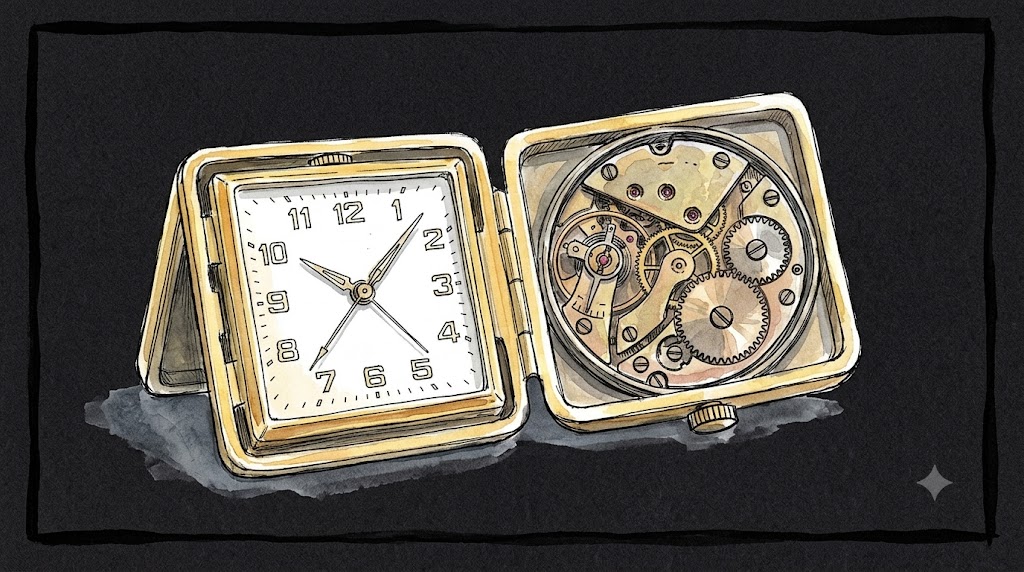 The clock Sol placed in the time capsule. Her father’s keepsake. Her wish that Sun-jae’s time would never stop.
The wristwatch gets most of the attention. But there is a second object in this drama that carries just as much quiet weight.
The wind-up clock.
The drama never states this directly. But the context makes it clear: the clock Sol keeps carefully inside a box — alongside Sun-jae’s wristwatch — is her father’s keepsake. One of the few things she has left of him. Giving it away is not a small gesture. It is one of the most personal things she could possibly offer.
The Time Capsule
Sol places the clock and a letter inside a time capsule, to be found by Sun-jae. The feeling behind the gesture is expressed simply:
“I hope your time never stops. I hope it keeps moving.”
On the surface, this reads as affection. Underneath, it carries everything the drama has been building.
Sun-jae’s death — the event that sent Sol back in time — is the image of time stopped. A life cut short. A future that never arrived. Sol’s wish is not just romantic. It is a wish against the specific ending she came back to prevent. The word she chooses — 흘렀으면 (I hope it flows) — is the word for a river moving. Not time passing abstractly. Time as something that moves, carries, continues.
20:23 — The Time the Clock Was Stopped At
When 20-year-old Sun-jae first receives the clock, he notices something.
The hands are frozen. Stopped at exactly 20:23.
2023 is the year Sun-jae dies in the original timeline — the year Sol came back to prevent. The clock Sol’s father once owned has been sitting still at that exact moment. As if time itself had already marked the hour of his death, long before it happened.
Then Sun-jae winds it.
The hands begin to move.
The drama does not put a caption on this moment. It does not need one. A 20-year-old boy turns the key of a clock that was stopped at the year he was supposed to die — and sets it running again. The future is no longer fixed. The ending Sol came back to change is quietly, visually, confirmed as changed.
It is one of the most precisely constructed images in the drama. Easy to miss on first watch. Impossible to forget once you see it.
The Clock as a Key to His Memory
In the final stretch of the drama, Sun-jae has lost all memory of Sol. The timeline has taken that from him.
Then he winds the clock again.
The act of winding a clock is the act of restarting time — of making something that has stopped begin to move again. In the drama’s symbolic logic, this is the moment when Sun-jae’s frozen memories begin to return. The clock Sol gave him — her father’s clock, carrying her wish that his time would keep moving — becomes the thing that brings him back to her.
The drama does not explain this in dialogue. It does not need to. The image says it.
| Object | Origin | What It Carries |
|---|---|---|
| Sun-jae’s wristwatch | Sun-jae | The mechanism of time-travel — Sol’s connection to him |
| Wind-up clock | Sol’s father | Sol’s love for her father · Her wish for Sun-jae · The key to Sun-jae’s memory |
Sol’s father’s clock → Sol’s wish for Sun-jae → Sun-jae winds the clock → Sun-jae’s memories return.
One object. One gesture across time. The entire arc of the drama compressed into a single quiet scene.
This is what separates a well-crafted drama from a forgettable one. The sweetness is on the surface. But underneath, if you look — the structure was always there.
💥 The Twist That Changes Everything
Around episode 9, the drama reveals what most viewers had begun to suspect — and what lands harder than expected:
Sun-jae already knew.
The second episode ends with Sun-jae’s point of view — showing that he recognized Im Sol from the start. He had remembered her across fifteen years. From the moment she appeared in his teenage life, he had never forgotten her.
The audience assumed this was a story about a fan saving an idol. The reveal reframes it: this was always a story about two people who had been waiting for each other across time, without either one fully knowing it.
This is the moment the drama went from quietly watched to actively recommended. When people texted their friends to start it immediately.
🏁 The Ending — “I Remember Everything.”
Sun-jae loses his memories of Im Sol. This is the drama’s final obstacle — and its cruelest one.
After everything she did. After four trips back in time. After all of it — he does not know who she is.
Then he winds the clock.
And he does.
“나 다 기억났어.” — “I remember everything.”
Four words. The drama earns them.
The ending is closed. Fully closed. There is no ambiguity, no open question, no bittersweet residue. They are together. The timeline held. Everything that was meant to be broken stayed whole.
A tightly sealed happy ending. Some dramas earn ambiguity. This one earned the opposite — the complete, unqualified, everyone-gets-what-they-deserve conclusion.
For a drama that ran its characters through repeated loops of loss and guilt, that landing felt right.
📊 What Makes This Drama Work vs. What Holds It Back
| What Works | What Has Limits |
|---|---|
| Curiosity engine — you cannot stop watching | Byeon Woo-seok’s acting range is narrow |
| Two watches with distinct emotional meaning | Some time-travel logic requires forgiveness |
| Kim Hye-yoon’s performance carries the emotional weight | The drama does not leave a long echo |
| 2008 nostalgia lands perfectly for 30s–40s viewers | Leans heavily on genre conventions |
| The 15-year love reveal (Ep. 2 ending) | Middle episodes drag occasionally |
| Clean, fully closed happy ending | Stakes never feel truly irreversible |
💬 Final Honest Verdict
My Mister asks a question and lets it sit in you for months.
Goblin gives you an ending — and then the quiet understanding that some things actually do last.
Run Into the Sun gives you sixteen episodes where you are never bored, never fully certain what comes next, and completely satisfied when it is over.
That is not a small thing.
Not every drama needs to change you. Some just need to hold you for sixteen hours and leave you smiling.
This one does that. Exceptionally well.
🔗 Read More
- Part 1 — Spoiler-Free Introduction →
- Editor’s Masterpiece Walk — My Mister (나의 아저씨) →
- Editor’s Masterpiece Walk — Goblin (도깨비) →
- Queen of Tears — 2024’s Biggest K-Drama →
- See all K-Drama posts →
Aired: 2024, tvN · Writer: Lee Si-eun · Directors: Yoon Jong-ho, Kim Tae-yeop