Along with the Gods: The Two Worlds — Ending Explained & The Meaning Behind the Seven Hells
A full spoiler breakdown of Along with the Gods: The Two Worlds — the seven hells explained, the twist behind Soo-hong, and what the ending really means.
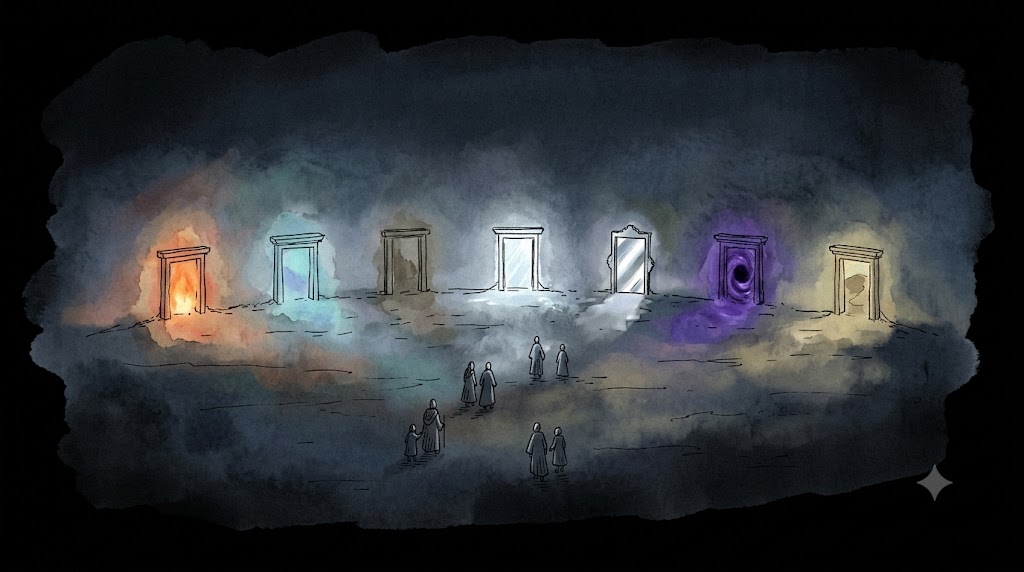
⚠️ Spoiler Warning. This post breaks down the full plot, the twist, and the ending of Along with the Gods: The Two Worlds. If you have not seen the movie yet, start with our spoiler-free introduction first.
A Quick Recap
Firefighter Kim Ja-hong dies saving a child from a fire. Three grim reapers, Gang-rim, Hae Won-maek, and Deok-choon, guide him through seven trials in seven hells. He has 49 days. If he passes all seven, he is reincarnated, and his guardians earn credit toward their own reincarnation.
On the surface, this looks like a simple story about a good man proving he was good. Underneath, it is a story about a lie one family told to survive, and what it costs to finally tell the truth..
The Seven Hells, and What They Really Judge
King Yeomra decides the order of every soul’s trials, from the lightest sin to the heaviest. For Ja-hong, the seven hells arrive in this order:
| Hell | What It Judges | Representative Setting or Punishment |
|---|---|---|
| Murder | Did your actions cause someone’s death? | Fire |
| Indolence | Did you waste the life you were given? | Water |
| Deceit | The lies you told in life | Iron |
| Injustice | Turning away from people who needed help | Ice |
| Betrayal | Betraying someone’s trust or faith | Mirrors |
| Violence | Physical harm done to others | Gravity |
| Filial Impiety | Disrespect or harm toward parents and family | Sand |
These settings are the film’s own visual motifs for each hell, not official mythological labels, so think of them as staging rather than fixed doctrine.
Ja-hong is judged a “noble soul” early on, so he skips the trials of Injustice and Betrayal without a hearing. It looks like he is close to a clean sweep. That is exactly when the film starts pulling the floor out from under him.
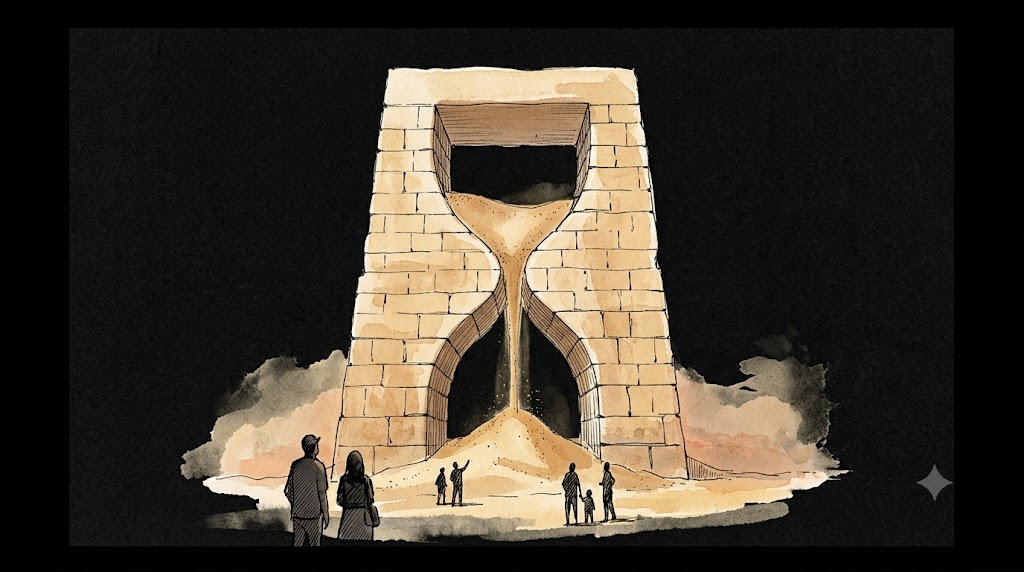 The last hell is always the hardest one to face.
The Secret Ja-hong Was Hiding
Here is the twist the whole film builds toward: Ja-hong was not always the perfect older brother.
Years earlier, poverty pushed the family to the edge. Ja-hong, desperate and ashamed, attempted a murder-suicide meant to end his mother’s suffering along with his own. His younger brother, Soo-hong, walked in and stopped him. In the chaos, Ja-hong struck Soo-hong and fled the house, choosing to disappear rather than face what he had done. He spent the next fifteen years supporting his mother and brother from a distance, quietly, without ever asking forgiveness.
That guilt is the real reason Ja-hong avoided going home. It is also the reason the Hell of Filial Impiety becomes the one trial he cannot easily win.
Meanwhile, in the living world, Soo-hong is accidentally shot during a standoff with a fellow soldier, Won Dong-yeon. Their superior, Lieutenant Park Moo-shin, panics and buries Soo-hong to hide the incident, not stopping even after realizing he is still alive. That betrayal, more than the accident itself, is what turns Soo-hong into a vengeful spirit powerful enough to shake the boundary between the living world and the afterlife. Gang-rim leaves Ja-hong’s trial to investigate what happened to Soo-hong, and the two storylines, brother in the underworld and brother as a vengeful ghost, race toward the same final court.
The Ending, Explained
At the Hell of Filial Impiety, Yeomra rules against Ja-hong immediately. The attempted harm to his own mother is not something the guardians can argue away with technicalities.
Then, with Gang-rim and Hae Won-maek’s help, Soo-hong does something no one expects. He enters his mother’s dream and asks her the truth: did she know, back then, what Ja-hong almost did? She answers that she was awake the whole time. She knew. And she had already forgiven him, silently, years ago.
That single detail changes everything, because of one rule written into the law of the underworld: a sin that has already been sincerely forgiven in the living world cannot be judged again in the afterlife. Since the mother forgave Ja-hong long before he ever died, Yeomra’s court has no legal ground left to convict him. The verdict flips. Ja-hong is cleared and ordered to be reincarnated immediately.
It is a quiet way to end a trial built on spectacle. The biggest verdict in the film is not decided by fire, ice, or gravity. It is decided by a mother’s forgiveness, given long before anyone asked for it.
Was Yeomra the Real Antagonist?
While Ja-hong’s trial closes, Gang-rim realizes something darker: Yeomra had been quietly interfering with the investigation into Soo-hong’s death the entire time, for reasons the first film never fully explains. Gang-rim decides to confront Yeomra directly instead of walking away. He also makes his choice for the guardians’ 49th and final soul: Soo-hong himself, the vengeful brother who caused so much chaos, becomes the very soul that could finally earn Gang-rim, Hae Won-maek, and Deok-choon their own reincarnation.
It is a fitting choice. The story that began with one brother’s guilt ends with the other brother’s redemption.
Small Details With Big Meaning
A few details reward viewers who watch closely:
- The red ink. When the guardians read a name from their death list, it is written in red. In Korean culture, writing a living person’s name in red ink was traditionally seen as a curse, a wish for harm. The detail may evoke that old taboo, though the film never spells out the connection.
- A modern jab in the Hell of Murder. During the trial, the guardians touch on how indirect or careless harm, not just physical violence, can count against a soul. Some viewers read this as a quiet nod to how casual cruelty, like careless words posted online, can still leave real damage.
- Ma Dong-seok’s cameo. His brief appearance as the household god Seongju is easy to miss on a first watch. It sets up a much bigger role for him in the sequel, Along with the Gods: The Last 49 Days.
A personal note from the Editor.
The idea that a debt of the heart can be paid off silently, without ever saying the words, is something that feels very familiar if you have spent time around Korean family culture. Nobody in this movie says “I forgive you” out loud until it is almost too late. That silence is not coldness. It is its own kind of love. I think that is why this ending lands so hard for audiences who grew up with, or grew close to, that same quiet way of showing care.
Why the Twist Works
A lot of fantasy films spend their entire budget on the “how.” Along with the Gods spends just as much on the “why.” Every hell exists to strip away one more layer of Ja-hong’s carefully built image as a perfect man, until the film is left with the one true, messy, human thing underneath: a son who almost broke, and a mother who loved him anyway.
That is also why the twist survives repeat viewings. Once you know Ja-hong’s secret, the early trials read differently. His nervousness in the Hell of Murder, his refusal to talk about his family, his guardians’ careful handling of certain topics: all of it was pointing toward the Filial Impiety trial from the very first scene.
Editor’s Rating
9.0 / 10
The visual world-building was already impressive in Part 1. Knowing the full story behind Ja-hong and Soo-hong makes every trial hit twice as hard on a second watch.
Meet the Director and Cast
Kim Yong-hwa (Director/Writer) was already known in Korea for box office hits like 200 Pounds Beauty and Take Off. While making Mr. Go (2013), he grew unsatisfied with the visual effects he could get from outside vendors for the film’s CG gorilla, so he founded the VFX house Dexter Studios himself — which became the backbone of this entire series. He shot both The Two Worlds and its sequel, The Last 49 Days, at the same time, a rare and expensive approach for Korean cinema.
Ha Jung-woo as Gang-rim, the sharp, guarded leader of the three grim reapers. One of Korea’s most consistently bankable leading men (The Chaser, The Handmaiden) and also an active painter with his own solo exhibitions. Instagram @__hajungwoo
Cha Tae-hyun as Kim Ja-hong, the firefighter whose entire afterlife hinges on the secret above. A familiar face in Korean film and variety TV for decades (My Sassy Girl, 2 Days & 1 Night). Ha Jung-woo and Cha Tae-hyun had appeared together in lighter, more comedic Korean films earlier in their careers, so putting them at the emotional center of a story about death, guilt, and forgiveness was a real shift in tone for both actors — part of why their scenes together carry so much weight.
Ju Ji-hoon as Hae Won-maek, the sword-skilled, sharp-tongued reaper, known for a wide-ranging career including the zombie period drama Kingdom. Instagram @_jujihoon
Kim Hyang-gi as Deok-choon, the youngest of the three reapers — a former child actor with an acclaimed adult career (Innocent Witness). Her Instagram handle traces back to an on-set nickname Ha Jung-woo gave her during filming. Instagram @kimsmell1
Kim Dong-wook as Kim Soo-hong, Ja-hong’s younger brother, also known for Mystic Pop-up Bar. Instagram @kimdngwk
Lee Jung-jae as Yeomra, King of the underworld. Long before his globally recognized role in Squid Game, Lee had already built a decades-long career including New World and Il Mare. Instagram @from_jjlee
It took a large team to build seven distinct hells: Dexter Studios drew on roughly 300 artists and technicians, and before the film even premiered, it was pre-sold to 103 countries and regions across the Busan and American Film Markets — a strong early signal of how much confidence the industry had in this story.
Related Reads on K-Unpacked
New to the series? Start with our spoiler-free introduction to Along with the Gods: The Two Worlds. If family-centered Korean stories move you, our deep dive into My Mister explores similar themes of quiet, unspoken love. And if you are curious how this film stacks up against Korea’s biggest movies of all time, check our Korea box office rankings series.
Which twist got you the most — Ja-hong’s secret, or Yeomra’s manipulation? Let us know through our Contact page.