BLACKPINK Part 1 — Four Strangers, One Dream: The Origin Story
How four girls from South Korea, Thailand, New Zealand, and Australia ended up in the same YG dormitory — and became BLACKPINK. The casting stories, the 6-year training, and the debut that changed K-pop girl groups forever.
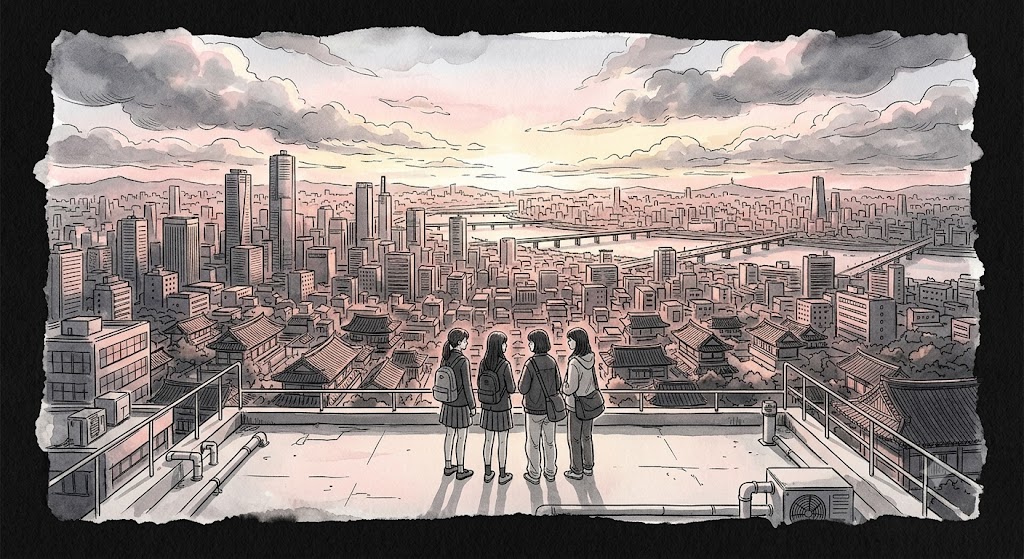
In 2010, YG Entertainment — home of BIGBANG and 2NE1 — started looking for the next big girl group.
What they ended up with was something nobody planned: four girls from four completely different corners of the world, finding their way to the same cramped dormitory kitchen in Seoul.
One night early in their training, all four of them stayed up until dawn — in their pajamas, Rosé playing guitar, Jisoo harmonizing, all of them singing together for no reason except that it felt right.
Rosé later recalled that the connection among the four of them felt immediate and natural from that first night — long before anyone had decided what BLACKPINK would become.
That night in the kitchen might be the real beginning of BLACKPINK.
K-Unpacked’s take: The number that stands out most in BLACKPINK’s origin story is not the training years any one member logged individually — it’s the seven-year gap YG let sit between 2NE1’s 2009 debut and BLACKPINK’s 2016 launch. Most labels, YG included in later years, treat a multi-year gap between girl-group debuts as a real financial and market risk: trainees age out, trends shift, and a rival label can simply fill the space first. YG let the lineup itself keep changing instead — reportedly cycling through proposals from five to nine members before settling on four — rather than debuting on a schedule. Whether that patience was strategy or simply repeated indecision is genuinely debatable. But the result was a group whose four members had already spent years learning each other’s rhythms before a stage ever asked them to perform together, which is a very different foundation than a lineup assembled in the final months before debut.
📌 This is Part 1 of a 3-part BLACKPINK series.
- Part 1 — Four Strangers, One Dream ← you are here
- Part 2 — How Four Girls Conquered the World
- Part 3 — In Your Area — Everywhere
🏢 YG Entertainment: The Label That Waited Seven Years
YG Entertainment is one of Korea’s “Big Three” labels. In K-pop, this matters enormously. SM Entertainment and JYP Entertainment were producing major girl groups throughout the 2000s and early 2010s. YG had BIGBANG and 2NE1 — but after 2NE1 debuted in 2009, there was no new YG girl group for seven years.
The wait wasn’t laziness. YG began assembling its trainee pool around 2010 and publicly announced plans for a new girl group in 2011. The project was repeatedly delayed as the company continued evaluating and changing its trainee lineup — reports over the years described potential lineups ranging from five to nine members before the company settled on four.
During that time, four trainees stayed. Prepared. And waited.
🎤 How Each Member Was Found
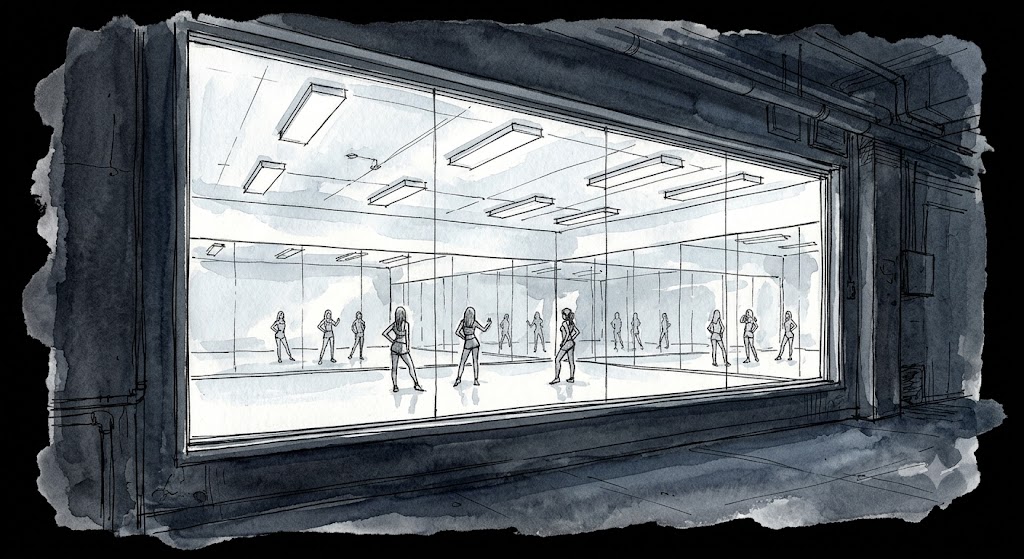 Four girls. Four countries. One practice room in Seoul — and six years of waiting.
Jennie (Kim Jennie) — The First to Arrive, 2010
Jennie was born in Seoul and moved to Auckland, New Zealand around age 8, where she spent roughly five years studying at ACG Parnell College. While there, she appeared as a Korean student in a 2006 MBC documentary about English-language education — making her the first future BLACKPINK member to appear on television, long before debut.
At 14, her mother had considered sending her to the US for further schooling, but Jennie chose instead to return to Seoul to pursue music. She auditioned for YG and became the first trainee in what would eventually become BLACKPINK.
She spent nearly six years as a trainee — the longest of any member — waiting for a debut that kept getting delayed. She has said she genuinely feared she would never debut at all.
💡 Because Jennie was fluent in English, she was frequently assigned English-language rap parts during training, and gradually developed into one of the group’s primary rappers. Today she’s one of the most iconic rappers in K-pop.
Lisa (Lalisa Manobal) — Selected From Thousands, 2010
Lisa was born and raised in Bangkok, Thailand, where she had been dancing since childhood. She was part of a dance crew, and performing was the only thing she ever wanted to do.
In 2010, YG Entertainment held open auditions in Thailand. Thousands of hopefuls showed up. Lisa was the only applicant to pass that day.
She moved to Seoul in 2011, becoming YG’s first-ever non-ethnically-Korean trainee. She spoke almost no Korean. She was 14 years old, thousands of kilometers from home, in a country whose language she didn’t know.
She learned Korean through classes, through daily life with her fellow trainees, and through sheer determination. Five years later, she debuted as one of the group’s primary rappers, known for a rapid, rhythmically precise delivery.
💡 Lisa is the only non-Korean member of BLACKPINK. Her Thai identity has remained central to her artistry — most visibly in her solo work, where her Bangkok roots are a source of deep pride.
Jisoo (Kim Jisoo) — Already at Home in the Spotlight, 2011
Jisoo grew up in Gunpo, a city about 20 miles south of YG’s Seoul headquarters. She attended the School of Performing Arts Seoul, where she joined the drama club and began attending auditions.
She joined YG Entertainment as a trainee in August 2011, training for five years before debut.
During those trainee years, Jisoo appeared in TV commercials, music videos (including Epik High and HI SUHYUN), and even had a cameo in the popular K-drama The Producers. She was one of the most visible YG trainees — even as she hadn’t debuted yet.
💡 A plot twist: While training at YG, Jisoo was approached at a YG concert by someone from a rival label who asked if she’d consider becoming an idol. She said no — she was already a YG trainee.
Rosé (Park Chaeyoung) — First in Australia, 2012
Rosé was born in Auckland, New Zealand and raised in Melbourne, Australia. She grew up singing and playing guitar and piano — mostly at home, in a quiet suburban life far removed from the Seoul music industry.
Her father heard about a YG audition being held in Australia and signed her up. She competed against more than 700 applicants — and placed first.
At 15, she packed her guitar and flew to Seoul. She would train for about four years before debut.
The night she arrived at the YG dormitory, she met her three future bandmates for the first time. Lisa noticed the guitar. She asked Rosé to play something. The four of them stayed up covering songs until morning.
💡 That guitar is still with Rosé. It has appeared in performances, music videos, and interviews throughout her career. In 2022, she noted that “it’s older than my dog Hank.”
📋 Member Roster at a Glance
| Member | Real Name | Background | Joined YG | Training Period |
|---|---|---|---|---|
| Jennie | Kim Jennie | South Korea–born · raised partly in New Zealand | 2010 | ~6 years |
| Lisa | Lalisa Manobal | Bangkok, Thailand | 2010/2011 | ~5 years |
| Jisoo | Kim Jisoo | Gunpo, South Korea | 2011 | ~5 years |
| Rosé | Park Chaeyoung | New Zealand–born · raised in Melbourne, Australia | 2012 | ~4 years |
💅 What Does “BLACKPINK” Actually Mean?
The name was revealed on June 29, 2016 — along with the confirmation that the group would have four members, not seven.
YG’s explanation: “Pretty isn’t everything.” The label said the name was designed to challenge the idea that “pink” represents only prettiness — emphasizing that the members had talent and substance behind the visual appeal.
Other names reportedly considered along the way included Pink Punk, Baby Monster, and Magnum, according to Jisoo’s own later recollections. They went with BLACKPINK — and it fit.
The four-member structure was deliberate. Unlike the large-ensemble groups becoming popular at the time, BLACKPINK would be lean and focused. Jennie and Lisa became the group’s primary rappers, while Rosé and Jisoo anchored the vocals — though in practice, all four members’ roles overlap, and each is distinct and irreplaceable.
🏋️ Six Years of Training: What It Really Cost
K-pop trainee life is notoriously demanding. At YG, trainees went through a rigorous monthly evaluation system where they performed solo and in teams for judges — developing choreography, styling, and their own creative choices. There was no guaranteed debut. There was no guaranteed anything.
For BLACKPINK’s members, the wait was especially long. The debut kept getting pushed back. Numerous trainees cycled through different proposed lineups before YG finalized the four members who became BLACKPINK.
Jennie has said she genuinely didn’t believe she would ever debut. Rosé has described crying alone in bathrooms when things got hard. Lisa, away from her family and culture in a country she had to learn from scratch, pushed through isolation and homesickness with a smile that became her signature.
What kept them going? Each other — and music.
When YG finally set a debut date in 2016, the four members had already been living, training, and growing together for years. The group that walked onto the stage on August 8, 2016 wasn’t assembled at the last moment. It had been forged slowly, in a practice room, over half a decade.
🎬 The Debut: August 8, 2016
On August 8, 2016, BLACKPINK released their debut single album Square One, featuring two tracks: “Whistle” and “Boombayah.”
Both songs moved immediately.
“Whistle” debuted at #1 on South Korea’s Gaon Digital Chart. “Boombayah” hit #1 on the Billboard World Digital Song Sales chart — making BLACKPINK the fastest act ever to achieve that and the first K-pop girl group to occupy the top two positions on that chart simultaneously.
Thirteen days after debut, BLACKPINK won their first music show award. At the time, it was the fastest debut-to-win record for a Korean girl group.
The industry paid attention.
| Debut Date | August 8, 2016 |
| Debut Album | Square One |
| Lead Singles | “Whistle” / “Boombayah” |
| Label | YG Entertainment |
| Members | 4 (Jennie, Lisa, Jisoo, Rosé) |
| First Music Win | 13 days after debut (fastest record at the time) |
| First Billboard #1 | “Boombayah” — World Digital Song Sales |
▶ Watch BLACKPINK ‘Boombayah’ MV on YouTube
▶ Watch BLACKPINK ‘Whistle’ MV on YouTube
💭 Why This Origin Story Matters
BLACKPINK’s four members bring an unusually international mix of life experience for a major K-pop girl group debuting in 2016. One member from Thailand who couldn’t speak Korean when she arrived. One born in New Zealand and raised in suburban Australia. One who was born in Korea but spent years of her childhood in New Zealand, returning with fluent English and a different perspective. One who grew up entirely in Korea and once turned down interest from a rival label because she was already committed to YG.
Four very different people — four different backgrounds, four different skill sets, four different ways of moving through the world — who found each other in a practice room in Seoul and became something none of them could have been alone.
That’s BLACKPINK.
🇰🇷 What It Meant for YG to Debut a Non-Korean Member as a Core Rapper
Lisa joining YG in 2010 as the label’s first-ever non-ethnically-Korean trainee was a bigger structural shift than it might look from outside K-pop. At the time, nearly every major idol group — even ones with international members — built its lineup around a Korean-majority core, with non-Korean members often positioned in supporting roles. YG placing a Thai trainee with no prior Korean-language ability on a path to become one of BLACKPINK’s two primary rappers, a highly visible position, was a genuine departure from that pattern.
It also mattered specifically for Korea–Thailand cultural ties. K-pop had already been popular in Thailand for years by 2010, but having a Thai member front and center in a major YG group changed the relationship from “Thai fans watching Korean idols” to “a Thai performer inside a Korean idol group” — a shift Thai media covered extensively once BLACKPINK debuted, and one that Lisa herself has spoken about as a source of responsibility as much as pride.
None of this erases how hard those early years were for her — arriving at 14 without the language, thousands of miles from family. But it’s part of why her debut mattered beyond just “one more talented trainee, finally debuting.”
🔗 Continue the Story
- 👉 Part 2 — How Four Girls Conquered the World — Coachella, Ddu-Du Ddu-Du, and the global breakthrough
- 👉 Part 3 — In Your Area — Everywhere — Records, solo careers, Born Pink, and DEADLINE