BTS Part 1 — Seven Strangers, One Stage: The Origin Story
How seven boys from across South Korea became BTS. The casting stories, the meaning behind the name, the grueling trainee years — and the debut nobody expected to matter.

In 2010, a small music label in Seoul called Big Hit Entertainment was planning its next move.
Compared to the industry giants — SM, YG, and JYP — Big Hit was tiny, with far less capital and no idol-group track record of its own. But it wasn’t starting from nothing: founder Bang Si-hyuk was already an established producer and songwriter, and the label had worked with acts including 8Eight and the duo Homme.
What Bang wanted next was different: a hip-hop group that was raw, real, and said things other K-pop groups wouldn’t dare say.
He started making calls. What came back would change music forever.
K-Unpacked’s take: The detail that gets lost in most BTS origin retellings is how much of a gamble the casting itself was, not just the company’s small budget. Look at the roster Big Hit actually assembled: a street-cast acting student with zero singing experience (Jin), a member discovered by accident while accompanying a friend (V), and an underground rapper who thought he’d signed up to be a producer, not a performer, and jokes to this day that he was “tricked” into dancing (Suga). A Big Three label in 2010 was casting for a known formula — visuals, vocal ability, dance precision, proven trainee pedigree. Big Hit, with none of that formula’s resources, ended up casting for something else almost by necessity: raw, specific personalities who could write and mean the confrontational lyrics Bang Si-hyuk wanted. That was not a marketing decision made in a boardroom. It was what happens when a company too small to compete on polish has to compete on something else instead.
📌 This is Part 1 of a 3-part BTS series.
- Part 1 — Seven Strangers, One Stage ← you are here
- Part 2 — How Seven Boys Moved the World
- Part 3 — The Empire That Never Sleeps
🏢 Big Hit Entertainment: The Underdog Label
Before BTS, Big Hit Entertainment was not a big deal.
In 2010, K-pop was ruled by three giants: SM, YG, and JYP Entertainment. Everyone called them “the Big Three.” Big Hit was nowhere near that list in scale or resources — though Bang Si-hyuk himself was a known quantity, having produced 8Eight and the duo Homme before turning his full attention to a new project.
Bang initially considered forming a hip-hop crew centered on a rapper he’d just signed — RM. Over time, as he thought through what kind of group could actually sustain a career, the plan evolved into a full K-pop idol group model, while preserving something unusual: letting the members write their own lyrics about real things — school pressure, family expectations, the feeling of being young and lost and angry about it.
To do that, he needed to find the right people — from very different places, with very different stories.
🎤 How Each Member Was Found
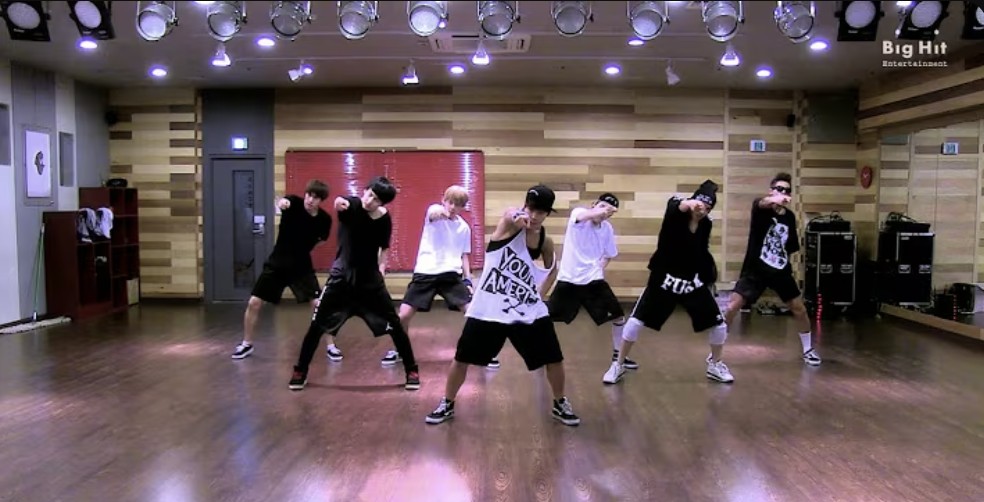 Seven boys. Seven different paths. One practice room in Seoul.
RM (Kim Namjoon) — The First to Arrive, 2010
RM fell in love with rap in sixth grade — specifically after hearing Epik High’s song “Fly.” He started rapping under the name “Runch Randa” and worked his way into one of Korea’s top underground rap crews, Daenamhyup, alongside rappers who would later become well-known names in Korean hip-hop.
At a separate hip-hop audition, RM impressed a rapper named Sleepy, who connected him directly to Bang Si-hyuk. RM auditioned for Big Hit — and became the very first BTS trainee. He was 15 years old.
💡 Fun fact: RM has repeatedly credited the American sitcom Friends as one of the most important tools in developing his spoken English — though he also received formal English education growing up. Today he speaks fluent English and handles many of the group’s major international interviews.
Suga (Min Yoongi) — The One Who Got “Tricked,” 2010
Back in Daegu, Min Yoongi was already known in underground hip-hop circles under the name “Gloss.” He wasn’t just a rapper — he was a producer, composing beats for local acts like D-TOWN and Reflow.
He saw a flyer for Big Hit’s rap competition, “Hit It.” He entered. He didn’t win — he placed second. But that was enough. Big Hit signed him as a producer-trainee.
The catch? Suga has joked in interviews over the years that he was told the group wouldn’t involve much dancing. Little did he know BTS would become one of the most choreography-intensive groups in K-pop.
💡 Suga still jokes about this today — that he was, in his words, tricked into thinking he wouldn’t have to dance.
J-Hope (Jung Hoseok) — The Dancer Who Became a Rapper, 2010
J-Hope had already earned a strong reputation in Gwangju’s street dance scene — not as a singer, but as a dancer. He was part of a crew called “Neuron,” known regionally and eventually nationally through dance competitions.
He first auditioned for JYP Entertainment, one of the Big Three, and had also tried out for Big Hit. The company saw something in his rhythm and sense of timing that went beyond dance, and brought him in as a trainee — where he gradually developed into one of the group’s rappers as the group’s hip-hop direction took shape.
💡 Interesting detail: Various fan timelines describe J-Hope as one of the earliest members to formally join Big Hit’s trainee roster in 2010, alongside RM and Suga.
Jin (Kim Seokjin) — Stopped on the Street Twice, 2011
Jin was an acting student — not a singer, not a dancer. He had no plans to be in a music group.
He was street-cast twice. First by SM Entertainment (one of the Big Three) in middle school. He thought it was a scam and ignored it. Years later, a Big Hit representative spotted him stepping off a bus near his university and convinced him to audition.
He passed — largely on the strength of his looks and raw potential, with no prior performance experience. Big Hit bet on him, and Jin spent years catching up technically alongside members who already had music or dance backgrounds.
| Joined Big Hit | 2011–2012 |
| Audition type | Street cast |
| Prior experience | Acting student. Zero singing or dance training. |
V (Kim Taehyung) — The Accidental Audition, 2011
V’s story is the most unexpected of all. He didn’t even go to the audition for himself.
He accompanied a friend who wanted to audition for Big Hit. While waiting, a casting staff member spotted V and encouraged him to try out too. He did — and he later said he was the only one selected from the Daegu audition that day.
V had first dreamed of becoming a singer in elementary school, and with his father’s encouragement, began taking saxophone lessons in middle school — training for several years before becoming a trainee. Nobody outside his town knew about his musical instincts yet.
💡 His identity was kept out of most pre-debut promotion until just before the group’s launch — Big Hit wanted to save him as a surprise. He was revealed publicly only days before BTS’s June 2013 debut.
Jungkook (Jeon Jungkook) — Seven Companies Wanted Him, 2011
Jungkook auditioned for the singing competition Superstar K when he was in middle school — and didn’t make it past the early rounds. But the talent scouts watching saw something the judges missed.
Several entertainment companies reportedly reached out to him after that audition, including JYP and FNC. He was 13 years old, weighing offers from some of Korea’s biggest labels.
He chose Big Hit — a tiny, unknown company — largely because of RM, who had impressed him enough to make him want to train alongside him.
💡 Jungkook is the youngest (maknae) of the group. He joined Big Hit around age 13. He grew up largely within the company — a formative environment that shaped much of his adolescence.
Jimin (Park Jimin) — Recommended by His Teacher, 2012
Jimin was a contemporary dance student at Busan School of Arts. He was primarily focused on becoming a professional dancer before his teacher encouraged him to consider an entertainment-company audition.
His dance teacher was so impressed by his talent that she personally recommended him to audition for Big Hit. He flew to Seoul, passed, and moved in. He became the last member to join, giving him the shortest trainee period of anyone in the group — less than a year before debut.
📋 Member Roster at a Glance
| Member | Real Name | Background | Joined Big Hit | How |
|---|---|---|---|---|
| RM | Kim Namjoon | Seoul (Ilsan) | 2010 | Underground rap connection |
| Suga | Min Yoongi | Daegu | 2010 | “Hit It” rap competition |
| J-Hope | Jung Hoseok | Gwangju | 2010 | Dance audition |
| Jin | Kim Seokjin | Anyang/Gwacheon | 2011–2012 | Street cast |
| V | Kim Taehyung | Daegu (raised in Geochang) | 2011 | Accompanied a friend to audition |
| Jungkook | Jeon Jungkook | Busan | 2011 | Chose Big Hit over other offers |
| Jimin | Park Jimin | Busan | 2012 | Teacher recommendation |
📛 What Does “BTS” Actually Mean?
The name has two layers — and both of them matter.
Layer 1 — The Korean name: 방탄소년단 (Bangtan Sonyeondan) Literal translation: Bulletproof Boy Scouts. The idea: a group that deflects the bullets of criticism, social pressure, and expectation. Young men who refuse to be knocked down by what society tells them they should be.
Layer 2 — The English meaning: “Beyond the Scene” Added in 2017 as part of a brand refresh. Officially, it represents young people who move beyond their present reality and open the door to the future — growth and forward motion, rather than a shield against criticism.
The group settled on seven members through the trainee and audition process rather than a symbolic plan — RM, Suga, and J-Hope handle most of the rapping, while Jin, Jimin, V, and Jungkook anchor the vocals, creating a musical architecture where every performance has both lyrical depth and melodic range.
🏋️ The Trainee Years: What It Actually Took
K-pop trainee life sounds glamorous. It isn’t.
The BTS members trained for anywhere from under a year (Jimin) to nearly three years (RM, Suga, J-Hope). During that time, their days looked something like this:
- Wake up early
- School or study in the morning
- Travel to the Big Hit practice rooms
- Dance training for several hours
- Vocal training
- Rap sessions and songwriting workshops
- Back to the dorm, often past midnight
- Repeat
Big Hit was small. The practice rooms were cramped. The budget was tight. Members have described sharing small rooms, long practice hours, and years of uncertainty about whether the group would ever debut.
Several members have spoken about how difficult those years were. Jungkook, still in middle school, dealt with homesickness. Members have described the pressure of training with no guarantee of success. What kept them going? Each other — and a founder and production team, including producer Pdogg and others, who worked to make the group happen.
🎬 The Debut: June 12–13, 2013
On June 12, 2013, BTS released their debut single album 2 Cool 4 Skool and held a debut showcase performing “No More Dream” for the first time. The following day, June 13, they made their official music-show debut on Mnet’s M Countdown.
The song was deliberately confrontational. It asked Korean teenagers a simple, loaded question — what is your dream? — and then criticized a society that tells young people to study, get good grades, and forget about wanting anything different.
It was not an immediate hit. The album debuted at #19 on the weekly Gaon Album Chart, climbing to a peak of #5 about six weeks later. It sold roughly 24,441 copies over the course of 2013 — respectable for a debut from a small label, but nothing close to the numbers Big Three groups routinely posted.
At the end of 2013, BTS won New Artist of the Year at the Melon Music Awards; further rookie awards followed at other ceremonies into early 2014. It was a start. A small, quiet, uncertain start.
Nobody in the industry called them the future of K-pop.
But ARMY was already beginning to form.
📊 Debut Snapshot
| Album Release | June 12, 2013 |
| Music-Show Debut | June 13, 2013 (M Countdown) |
| Debut Single | 2 Cool 4 Skool |
| Lead Single | “No More Dream” |
| Label | Big Hit Entertainment |
| Members | 7 (RM, Jin, Suga, J-Hope, Jimin, V, Jungkook) |
| Gaon Chart | Debuted #19, peaked at #5 |
| 2013 Album Sales | ~24,441 copies |
| First Award | New Artist of the Year — 2013 Melon Music Awards |
▶ Watch BTS ‘No More Dream’ MV on YouTube
💭 Why This Origin Story Matters
BTS still came together through the standard K-pop trainee system — auditions, training, a company shaping the final lineup. What made it different was the range of experience its members brought in: underground rap connections, street dance competitions, acting backgrounds, and formal dance training, alongside street casts and teacher recommendations. None of them were destined for this. None of them were the obvious choice.
Big Hit’s decision to let members write their own lyrics and communicate directly with fans — rather than keeping them at arm’s length — helped set the bond between members and ARMY apart from many contemporaries.
🇰🇷 How Korea Actually Sees the Trainee System
Outside Korea, the K-pop trainee system sometimes gets described as harsh or even exploitative — years of unpaid training with no guarantee of debut. That criticism isn’t baseless, and BTS’s own members have spoken candidly about how hard those years were.
But inside Korea, the trainee system is also understood through a different, very Korean cultural lens: intense, structured preparation for a competitive outcome is simply how success works here, in almost every field. The years students spend in hagwon (private cram academies) preparing for the Suneung college entrance exam follow a strikingly similar shape — long hours, delayed reward, total commitment, judged at the end by a single high-stakes moment. Koreans watching a trainee documentary often recognize the emotional texture of it immediately, because it echoes their own adolescence in a different arena.
That’s not an argument that the system doesn’t have real problems — it does, and Korean media covers those problems too. It’s just a reminder that “seven years of training with no guarantee” reads as more familiar, and less uniquely brutal, to a Korean audience than it does to an outside one.
🔗 Continue the Story
- 👉 Part 2 — How Seven Boys Moved the World — The journey from small Seoul label to global phenomenon
- 👉 Part 3 — The Empire That Never Sleeps — Billboard records, the UN, World Cups, and ARIRANG