Crash Landing on You: Ending Explained & Hidden Symbolism
Already watched Crash Landing on You? Let's unpack the ending, the hidden symbolism, and the details you almost certainly missed on your first watch.

⚠️ Full spoilers ahead. This piece is for viewers who have completed the series.
If you watched Crash Landing on You and found yourself staring at the ceiling afterward, wondering what it all meant — you’re not alone. The drama operates on multiple levels simultaneously: surface romance, political allegory, and a quietly devastating meditation on love and impossibility.
Let’s unpack it properly.
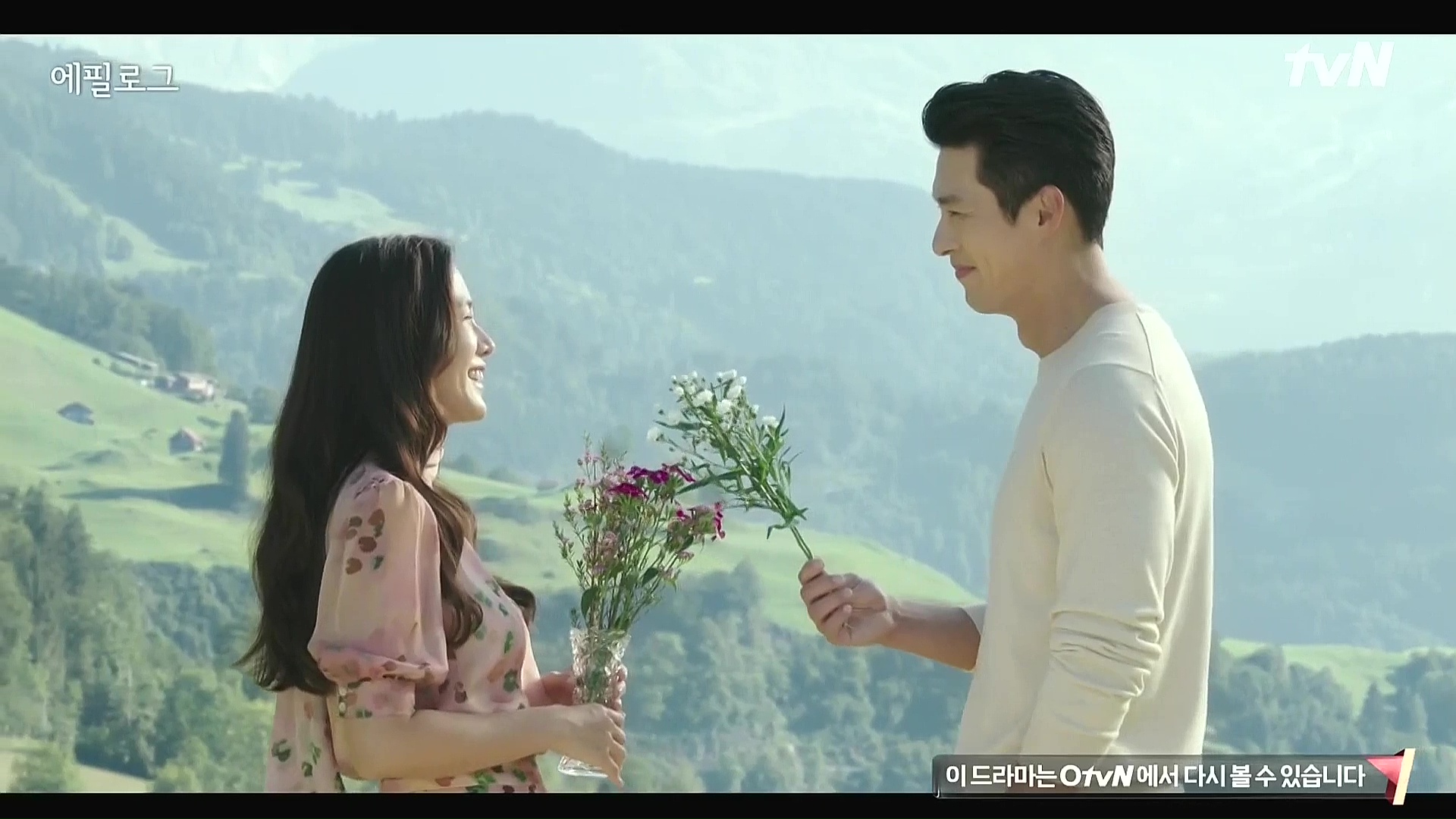 Six years on — what does Crash Landing on You really mean?
The Ending: What Actually Happened
The finale is one of the most discussed in K-Drama history — not because it’s ambiguous, but because it refuses to give viewers the resolution they wanted.
Ri Jeong-hyeok and Yoon Se-ri cannot be together in any conventional sense. He cannot permanently leave North Korea. She cannot stay. The drama’s answer to this impossibility is the Switzerland arrangement — an annual reunion, brief and deliberate, carved out of the margins of two incompatible worlds.
It’s not the ending viewers wanted. It’s the ending the story earned.
Why Switzerland?
Switzerland isn’t arbitrary. Throughout the drama, it functions as a kind of neutral zone — a place outside the Korean divide where different rules apply. Their first real connection deepens there in flashback. Their last reunion happens there in the finale. It’s the one geography their love story is allowed to fully occupy.
The choice is also quietly political. Switzerland is famously neutral territory. The drama is saying: their love can only exist where politics doesn’t reach.
The Piano: Ri Jeong-hyeok’s Emotional Language
Music runs through Crash Landing on You as a structural device, not just a soundtrack. Ri Jeong-hyeok’s piano playing is his emotional vocabulary — the thing he reaches for when words fail him completely.
 The piano scenes carry more emotional weight than almost any dialogue in the series.
Watch the piano scenes in sequence and you’ll notice something: he plays when he can’t speak. After his brother’s death. When Se-ri is in danger. When he believes he’ll never see her again. The music is always what escapes when everything else is locked down.
The callback in the finale — when Se-ri hears him play again in Switzerland — is devastating precisely because of what came before. His music was the first thing that made her see him clearly. It’s the last confirmation that nothing between them has changed.
The Paraglider: More Than a Plot Device
Se-ri’s paragliding accident is the inciting incident — but look closer and it’s the drama’s central metaphor.
She has spent her entire life in controlled, calculated freefall. Building her company. Managing her family’s cruelty. Maintaining the armor that kept her functional and isolated simultaneously. The storm that sends her into North Korea is the first time in her adult life that she has genuinely lost control.
And it’s only in losing control that she finds something real.
The paraglider returns in the finale — not literally, but visually. The final Switzerland scenes are shot with the same wide, open-sky cinematography as the opening accident. The drama is closing a loop: she fell then, and she’s still falling now, but this time she knows exactly where she’s landing.
Details You Almost Certainly Missed
The Shoes
In an early episode, Ri Jeong-hyeok carefully dries Se-ri’s shoes by the fire while she sleeps. It’s a small, quiet moment — easy to miss on a first watch.
In Korean cultural context, caring for someone’s shoes carries significant weight. It’s an act of service that implies deep respect, even devotion. Most viewers don’t register it consciously. But somewhere in the back of their minds, they feel it — and it’s one of the drama’s earliest signals that his feelings for her run far deeper than duty.
The North Korean Soldiers’ Letters
Before a particularly dangerous mission, the four soldiers write letters to their families. The camera lingers just long enough on their handwriting to reveal specific details about each man’s home life — details that pay off quietly in later episodes.
Most viewers miss this entirely on a first watch. On a rewatch, it reframes every comedic scene they’re in.
Se-ri’s Fashion as Character Arc
Track Se-ri’s clothing throughout the series. Her early North Korean disguise — practical, plain, nothing like her usual aesthetic — gradually becomes something she wears with ease. By the midpoint, she’s not performing ordinariness anymore. She’s actually comfortable in it.
Her wardrobe is a quiet visual record of exactly how much she’s changed, and what she’s gained by losing control of her carefully constructed life.
The Supporting Cast as Emotional Mirror
Crash Landing on You is unusual in how deliberately it uses its supporting characters to reflect the main relationship.
The four soldiers — Chi-su, Eun-dong, Joo-meok, and Kwang-beom — start as comic relief. By the finale, their loyalty to Se-ri has become one of the most emotionally loaded threads in the drama. They can’t say what Jeong-hyeok feels. But they show it, repeatedly, through every risk they take on her behalf.
The North Korean village women serve a similar function. Their warmth toward Se-ri — unconditional, practical, fiercely maternal — represents the life she never had in Seoul, surrounded by family members who resented her existence. The drama doesn’t underline this. It just shows it and trusts you to feel it.
The Real Meaning of the Ending
Some viewers wanted more. A defection. A permanent reunion. A different world.
But Crash Landing on You was never interested in fantasy solutions. Its power comes from taking an impossible situation seriously — from refusing to pretend that love is sufficient to overcome political reality.
What the Switzerland ending offers instead is something rarer: a love story that finds its shape within constraints, rather than despite them. Ri Jeong-hyeok and Se-ri don’t escape their worlds. They learn to exist across the distance between them.
That’s not a sad ending. That’s a true one.
And maybe that’s why, six years later, people are still talking about it.
Rating: 9.5 / 10
Haven’t watched yet? Start here first — no spoilers: 👉 Crash Landing on You: Is It Really Worth the Hype?