Squid Game S1 Deep Dive: Every Game, Every Death, Every Hidden Meaning ⚠️ Spoilers
Full spoiler breakdown of Squid Game Season 1 — all 6 games analyzed, the Oh Il-nam twist, the ending explained, and why Korean and global audiences reacted so differently.
⚠️ Full spoilers ahead. Watch Season 1 first. Not seen it yet? → Part 1: Spoiler-Free Introduction →
👉 This is Part 2 of a 2-part series — the full game breakdown, ending, and the director & cast profiles below.
🎮 All 6 Games — Complete Breakdown
Game 1 — Red Light, Green Light (무궁화 꽃이 피었습니다)
The rule: Run to the finish line before the giant doll turns around. Stop perfectly when she looks. Move when she looks — you die.
The shock: Nobody knew people would actually die. When the guns open fire, 255 players are killed — more than half of all 456 participants — leaving 201 survivors. The carnage unfolds over the full five-minute game, not all in a single instant.
Why the world couldn’t look away: The show crosses a line here that it never uncrosses. One moment it is a children’s game. The next it is a massacre. Audiences understood instantly — there is no going back.
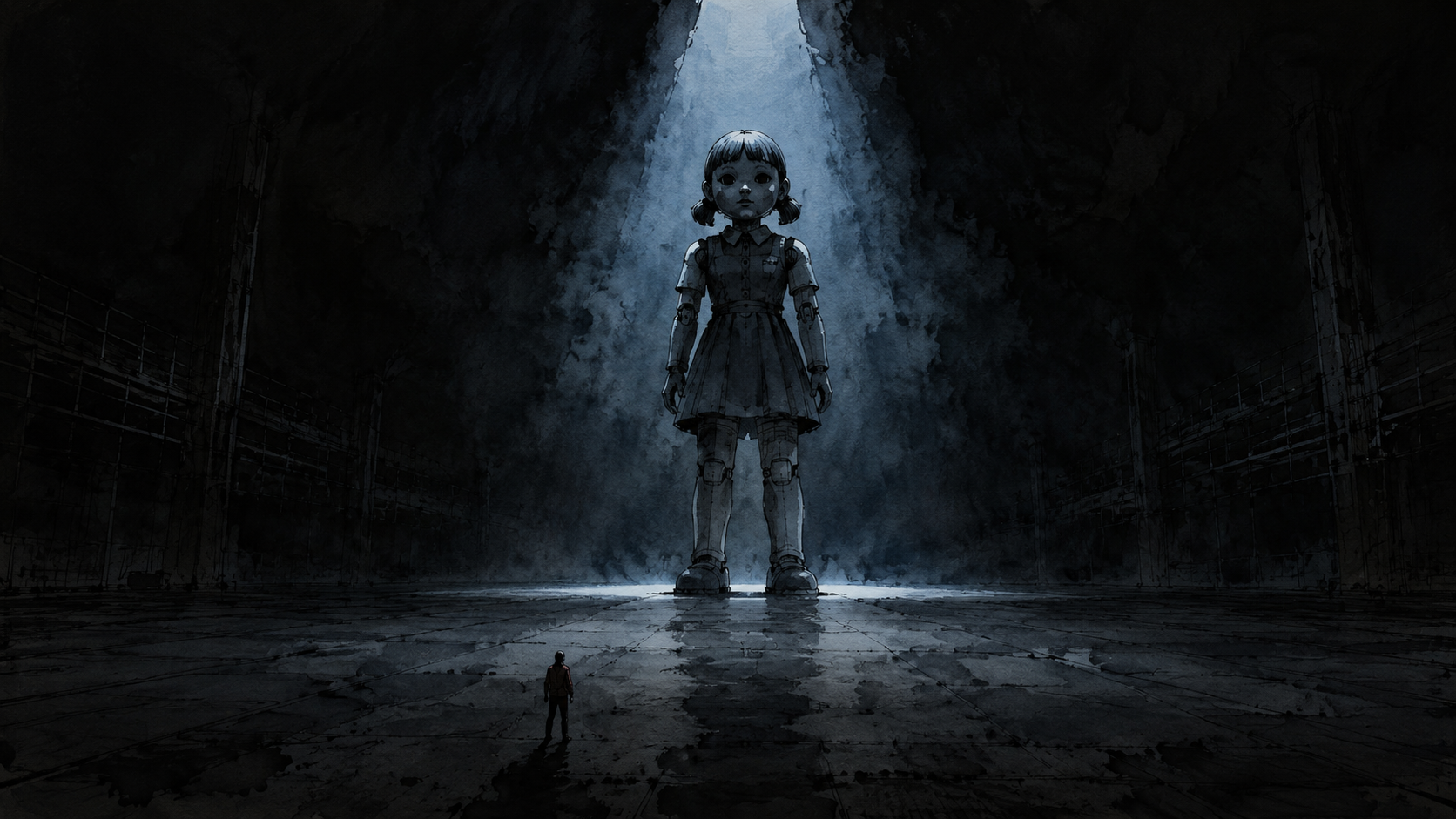
The doll — Younghee (영희): Based on a character from 1970s Korean school textbooks. The giant robotic version became one of the most recognized symbols in global pop culture. Life-size replicas were installed in cities across Asia, Europe, and the US in 2021.
What it means: You can run all your life toward a finish line and never know the rules until it is too late. Sound familiar?
Game 2 — Honeycomb (달고나 뽑기)
The rule: Use a needle to cut out your shape from a sugar candy without breaking it. Shapes: circle, triangle, star, umbrella. Finish in time or die.
Difficulty ranking: ★☆☆ Circle → ★★☆ Triangle → ★★☆ Star → ★★★ Umbrella
Gi-hun’s trick: He licks the candy to dissolve it slowly from the underside. Smart. Within the rules. Pure creativity under pressure.
For Korean audiences: Dalgona is a real street candy from 1970s and 80s Korea. Kids used to buy it from vendors outside school. The show turned a beloved childhood memory into a death trap.
After the show aired: Dalgona challenges went viral worldwide. Korean tourist spots set up honeycomb-cutting booths. Convenience stores sold out of dalgona kits.
Game 3 — Tug of War (줄다리기)
The rule: Ten players per team. Pull the rope. Losing team falls off a platform high above the ground.
The twist: Oh Il-nam — the elderly man who seems helpless — shares a strategy he learned from childhood games. In the first ten seconds, the team must lean back as far as possible, pushing their lower abdomens skyward, holding their ground until the opposing team loses their rhythm. When the other team gets a second wind and begins to gain the upper hand, Sang-woo devises a desperate plan B: everyone takes three sudden steps forward toward the edge, catching the opponents off-balance and causing them to fall.
What it means: Strength is not everything. Smart planning beats raw power. The weakest team wins. This is the show’s most hopeful moment — and that hope makes what comes next hurt more.
Game 4 — Marbles (구슬치기)
This is the cruelest game.
The rule: Play any marble game with your partner. Win all ten of their marbles. Whoever has zero marbles — dies.
The twist: Partners are not assigned randomly. Players choose who they trust. The person you feel safest with is the person you have to destroy.
The most heartbreaking moments:
Ali and Sang-woo: Ali trusts Sang-woo completely. Sang-woo tricks Ali into showing his marbles — then swaps them for pebbles. Ali realizes he has been betrayed. He loses. He dies quietly, without anger.
Gi-hun and Oh Il-nam: Gi-hun has befriended the old man throughout. When he wins, he weeps. He cannot feel good about it.
Sae-byeok and Ji-yeong: Ji-yeong intentionally loses. She gives her marbles to Sae-byeok on purpose. She wants Sae-byeok to survive. This scene made more people cry than any other in the whole show.
Global reaction: The marbles episode is rated by most viewers as the single best episode. It strips the show down to its real question: what would you do to the person you trust most, if your life depended on it?
Game 5 — Glass Bridge (징검다리)
 The glass bridge — luck versus knowledge
The rule: Cross 18 pairs of glass panels. One is tempered glass — safe. One is regular — it breaks. Wrong choice means falling to death.
The key twist: Player 017, Do Jeong-soo, worked as a glass manufacturer for 33 years. He can identify tempered glass by the faint stain marks visible when light hits it from the side, and by the cleaner sound it makes when struck. His expertise could save everyone still behind him.
Just when this knowledge could carry the remaining players to safety — the Front Man turns off all the lights.
(Note: Jang Deok-su, the gangster, is Player 101 — a completely different character who refuses to move at the front of the line, not the glass expert.)
What this means: The game claims to be fair. It is not. When a player finds a skill that helps them survive, the system changes the rules. This is the show’s sharpest political point — embedded in a thriller moment.
Game 6 — Squid Game (오징어 게임)
The rule: The original Korean children’s game the show is named after. Attackers must reach a squid-shaped court’s head. Defenders must stop them.
The final: Gi-hun vs. Sang-woo. Two childhood friends who played this exact game together as boys.
The ending: Sang-woo takes his own life. Gi-hun wins. Sang-woo’s last words: “Take care of my mother.”
🔍 The Biggest Twist — Who Is Oh Il-nam?
Player #001. An elderly man with a brain tumor. He befriends Gi-hun. He seems frail and harmless.
The truth: Oh Il-nam was never just a player. He is one of the founders of the entire game.
A group of ultra-wealthy men created Squid Game for entertainment. They watch people fight for their lives because they have so much money that nothing else excites them anymore.
Oh Il-nam joined as a player because he is dying anyway — and he wanted to feel alive one last time.
The final conversation: Gi-hun finds Il-nam in a hospital. Il-nam proposes one last bet. There is a homeless man collapsed outside in the snow. If no one helps him before midnight, Il-nam wins — proving people are fundamentally selfish.
Just before midnight, someone helps.
Il-nam dies — whether he registers that he has lost the bet remains ambiguous. The scene does not establish that he sees it.
What this means: Il-nam believed people only care about themselves. Gi-hun spent the whole show proving him wrong — and he still does it in the last moment.
🌍 Global vs. Korean Audience Reactions
| Scene | Global Reaction | Korean Reaction |
|---|---|---|
| Red Light, Green Light | “That children’s game is real?” | “I played this after school…” (nostalgia becomes horror) |
| Dalgona challenge | “Fascinating Korean candy” | Childhood memory at the school gate |
| Marbles episode | “Best episode of the show” | Ji-yeong and Sae-byeok scene hit Korean audiences especially hard |
| Oh Il-nam twist | “Did not see it coming” | Many noticed hints on rewatch — rewatches exploded online |
| Gi-hun’s red hair | “Bold character choice” | Director Hwang explained it as a symbol of Gi-hun’s rage and his inability to return to who he was |
🏁 The Ending — Why Did Gi-hun Turn Back?
Gi-hun won. He has ₩45.6 billion. His daughter is in the US.
On his way to the airport, he spots the Recruiter at a subway station — playing ddakji with a new target and handing over a card, the same way Gi-hun himself was recruited. He takes the man’s card.
Later, at the boarding gate, he calls the number on the card. He walks away — without boarding the plane — and turns back.
He is going back. Season 2 later confirms he intends to find and dismantle the organization behind the games.
What this means: Walking away would mean abandoning the memory of the hundreds of people who died. Gi-hun refuses to let those deaths mean nothing.
This decision sets up Season 2 — and it is the most important thing to understand about who Gi-hun is.
💡 What Director Hwang Dong-hyuk Said
Hwang Dong-hyuk has explained in multiple interviews that the series was intended to question a society that pushes people into extreme competition and leaves those who fail with little chance to recover. In his view, the players are not bad people — they are products of a system that strips them of options. The real problem, he has said, lies with those who design and profit from the competition above.
He has also said that the red dye Gi-hun puts in his hair at the end symbolizes rage — and the fact that Gi-hun can no longer return to the person he was before the games.
🎬 Meet the Director & Cast
Hwang Dong-hyuk (황동혁) — Director
Hwang Dong-hyuk first wrote the Squid Game script in 2009, while genuinely broke — he couldn’t even afford to rent comic books from a manga café. Everyone he pitched it to said no (“too weird,” “not commercial”), and the script sat in a drawer for 12 years until Netflix said yes. It became the most-watched piece of television content in human history.
While the script sat in that drawer, Hwang kept working on other films, including Silenced and Miss Granny, both well-regarded Korean movies in their own right. The stress of writing and directing every episode himself was so extreme he reported losing several teeth during production. He’s also been candid about money: paid a flat production fee rather than a share of Squid Game’s profits, he initially said he wouldn’t make a Season 2 — then made one anyway, explaining plainly, “to earn money.”
| Full Name | 황동혁 (Hwang Dong-hyuk) |
| Born | May 26, 1971 |
| Script written | 2009 · Netflix release: 2021 |
| Emmy | Outstanding Director |
💡 Fun fact: His earlier film Silenced (2011), based on a real school abuse case, led South Korea’s National Assembly to pass the “Dogani Law” strengthening protections for people with disabilities. A movie changed the law.
The Cast
Lee Jung-jae (이정재) — Seong Gi-hun. A top Korean star since the 1990s, playing a messy, gambling-addicted, genuinely warm man who fails at almost everything. In 2022, he became the first Asian actor to win Outstanding Lead Actor at the Emmy Awards.
Park Hae-soo (박해수) — Cho Sang-woo. A Seoul National University graduate hiding from the law after embezzling client funds. Stage-trained, and it shows in how deliberately he plays Sang-woo’s slow moral collapse.
Jung Ho-yeon (정호연) — Kang Sae-byeok. A fashion model with zero acting credits before this show — cast after sending in a self-tape audition from New York. Her Instagram following went from roughly 400,000 to more than 20 million in the weeks after the show aired; she later won a SAG Award and became a Louis Vuitton global ambassador.
Oh Yeong-su (오영수) — Oh Il-nam. A Korean theater legend with over 50 years on stage. In 2022, at age 77, he became the first Korean actor ever to win a Golden Globe (Best Supporting Actor, TV Series).
Heo Sung-tae (허성태) — Jang Deok-su. Plays a terrifying gang boss; off-screen, known for the opposite — a warm, funny personality that surprised viewers in post-show interviews.
Anupam Tripathi — Ali Abdul. Actually from New Delhi, India, not Pakistan like his character. He moved to South Korea in 2010 to study acting at the Korea National University of Arts and had already built a decade-long Korean acting career before this role.
💡 Why the ensemble worked: Squid Game isn’t built around one star — it’s built around six people whose desperation each represents something different: personal failure, ambition gone wrong, systemic exclusion, exploitation of the vulnerable, and what happens at the very top of the system.
👉 Continue Reading
- Part 1 — Spoiler-Free Introduction →
- Parasite Deep Dive — Symbolism & Ending →
- Most Watched K-Dramas of All Time →
- See all K-Drama posts →
Analysis based on director interviews, viewer data, and cultural context.