Lovely Runner: The Perfect Snack Drama — Deep Dive ⚠️ Spoilers
Is Lovely Runner (선재 업고 튀어) a masterpiece? No. Is it the most enjoyable K-drama binge of 2024? Absolutely yes. Full spoiler breakdown.
⚠️ Full spoilers. Including the ending.
👉 This is Part 2 of a 2-part series.
✏️ Editor’s Note — An Honest Assessment
Let me say this clearly upfront.
Lovely Runner is not My Mister. It is not Goblin. It does not leave a long echo. It does not rearrange something inside you after it ends.
What it is — and what it does extremely well — is keep you completely unable to stop watching.
This is a snack drama. A premium one. The kind where you finish an episode and immediately start the next without thinking about it. The curiosity engine runs from start to finish: what happens next, what happens next, what happens next.
There is craft in making that work. It is just a different kind of craft from what makes a drama great.
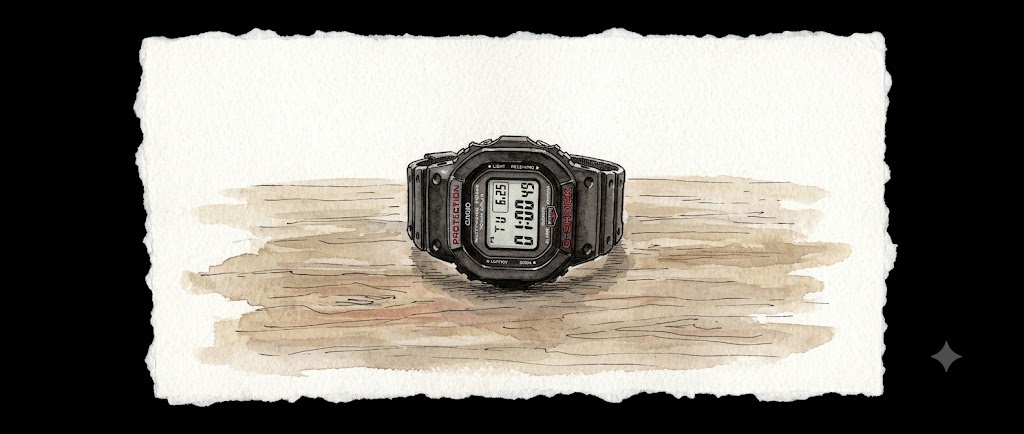
The time-slip mechanism — centered around Sun-jae’s watch — was a fresh touch. The watch as the trigger, the object that connects timelines, gave the device a specificity that most time-travel romances skip. And the fact that the story ends happily, after so many seemingly uncrossable obstacles, felt like a genuine relief rather than a cheap resolution.
That is enough. That is a good drama.
📖 The Full Story — What Actually Happens
2023: Before Everything
Im Sol is 34. A teenage accident left her paralyzed and using a wheelchair, but she has built a steady life — a job, a supportive family, and a quiet dream of becoming a film director. What kept her going through the hardest stretch was one thing: the words and music of idol Ryu Sun-jae, who once personally comforted her during a radio call at her lowest point.
Then she learns Sun-jae has died, apparently by his own hand.
In a daze — at what feels like the end of everything — she falls into a stream while wearing Sun-jae’s old watch, a piece of fan memorabilia she once bought at auction. The watch activates and sends her back fifteen years.
2008: Where She Lands
She wakes up as her 19-year-old self. High school. Sun-jae, at this point, is a promising swimmer — not yet a musician. A shoulder injury will later end that dream and push him toward music instead.
Sol knows what eventually happens to him. She does not know exactly why, or how to stop it. But she has decided: she is going to save him.
What she does not expect is that Sun-jae — at 19, before fame, before all of it — notices her. Remembers her. Starts to build a feeling around her that will last fifteen years.
The Central Complication
Sol’s watch gives her a limited number of chances to travel — the drama frames it as three attempts, counting down each time she returns. Each trip reveals something new. The rules of what can and cannot be changed become clearer, and more complicated. And the drama makes clear that the direct cause of the danger both of them face is a taxi driver, Kim Young-soo — a man tied to Sol’s original accident, who later crosses paths with Sun-jae as well. Sol’s guilt over repeatedly putting Sun-jae in harm’s way, simply by being close to him, nearly breaks her.
⌚ The Watch — Why It Works as a Device
Most time-travel dramas use vague or mystical mechanisms. A red thread. A magic door. An unexplained phenomenon.
Lovely Runner uses Sun-jae’s wristwatch — a specific, physical object with emotional weight. It belonged to him. Sol holds it. The slip happens.
This matters narratively because it ties the time-travel directly to Sun-jae himself, not to some external force. The drama is saying: she comes back because of him. Because of what he means to her.
It also creates a clear rule system for the audience. When the watch is involved, something is about to change. That predictability — used well — builds anticipation rather than confusion.
🕰️ The Time Capsule Clock — A Fan-Favorite Symbol
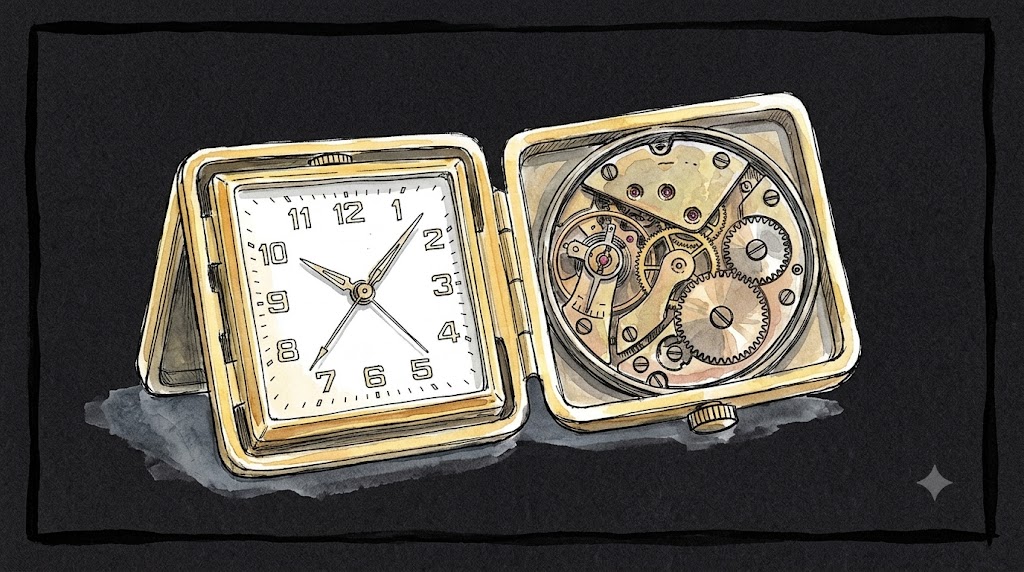 The travel clock Sol placed in the time capsule she buried with Sun-jae.
The wristwatch gets most of the attention. But there is a second object in this drama that fans latched onto just as strongly.
Partway through the story, Sol and Sun-jae bury a time capsule together — with instructions not to be opened until the exact hour of his death. Inside it, alongside a note, Sol leaves a small travel clock.
🧡 A note from the Editor: The drama never explains where this clock came from or why Sol specifically chose it — that part is left for viewers to fill in. What follows below isn’t confirmed by the show; it’s simply the reading that a lot of fans online settled on, and it’s worth sharing because it’s genuinely lovely.
A popular fan reading
Because the object is never explained on screen, some viewers have read it as something personal to Sol — a keepsake passed down in her family — and connected her choice to give it away to how much the gesture must have cost her emotionally. It’s a compelling theory, even though the drama itself stays quiet on where the clock came from.
The clock’s frozen hands
When Sun-jae digs up the capsule and sees the clock, some fans online pointed to the position of the hands and floated the idea that they were stopped at a time that echoes 2023 — the year of Sun-jae’s original death. The show never confirms this reading on screen, but it is the kind of detail that fans enjoy hunting for, and it adds a nice layer if you want to look for it on a rewatch.
What the show does confirm
What is clear from the show itself: once Sun-jae has the clock in hand, he pieces together why Sol has been pushing him away — and realizes she is trying to save his life. That moment (episode 8) is a real turning point, confirmed on screen, even if the deeper symbolism of the clock itself is left to interpretation.
The clock and Sun-jae’s memory
By the final stretch, Sun-jae has lost his memories of Sol entirely — the last timeline erased them. His memories return gradually in the drama’s final episodes, through a combination of recurring images, familiar feelings, and reconnecting with people and places tied to Sol. Some fans like to tie this moment back to the clock as well, reading his memory’s return as “time starting to move again” for him. It’s a nice piece of symbolic bookkeeping, even if the show itself credits the recovery to the accumulated weight of everything he’s experienced, not to one single object.
| Object | What We Know | Fan Interpretation |
|---|---|---|
| Sun-jae’s wristwatch | Confirmed mechanism of time-travel | — |
| Time capsule clock | Given by Sol, dug up by Sun-jae in Ep. 8, helps him realize her intentions | Popular reading: a symbol of restarting time / a personal keepsake |
This is the kind of drama where the surface story is sweet enough on its own — but part of the fun, clearly, was watching fans build their own layers of meaning on top of it.
💥 The Twist That Changes Everything
At the very end of Episode 2, the drama reveals what many viewers had begun to suspect:
Sun-jae fell for Sol first.
The episode closes on Sun-jae’s point of view, revealing that he had been smitten with her since the moment he first saw her — standing in the rain with a yellow umbrella — long before she time-traveled back into his life.
The audience had assumed this was a simple story about a fan saving an idol. The reveal reframes it: this was always a story about two people tied together by fate, each missing pieces of the other’s history.
For me, this is the moment the drama shifted from “pleasant watch” to “can’t stop talking about it.”
🏁 The Ending — “I Remember Everything.”
In the final timeline, Sun-jae has no memory of Sol at all. This is the drama’s last obstacle — and its cruelest one.
After everything she did. After multiple trips back in time. After all of it — he does not know who she is.
Then, gradually, piece by piece, it comes back to him.
“나 다 기억났어.” — “I remember everything.”
Simple words. The drama earns them.
The ending is closed. Fully closed. There is no ambiguity, no open question, no bittersweet residue. Sun-jae proposes; the finale shows their wedding. Sol also gets to pursue her own dream, directing her first short film with his support. Everything that was meant to be broken stayed whole.
A tightly sealed happy ending. Some dramas earn ambiguity. This one earned the opposite — the complete, unqualified, everyone-gets-what-they-deserve conclusion.
For a drama that ran its characters through repeated loops of loss and guilt, that landing felt right.
📊 What Makes This Drama Work vs. What Holds It Back
| What Works | What Has Limits |
|---|---|
| Curiosity engine — you cannot stop watching | Byeon Woo-seok’s acting range is narrow, in my view |
| Two timepieces with distinct narrative meanings | Some time-travel logic requires forgiveness |
| Kim Hye-yoon’s performance carries the emotional weight | The drama does not leave a long echo |
| 2008 nostalgia lands perfectly for 30s–40s viewers | Leans heavily on genre conventions |
| The reveal that Sun-jae fell for Sol first (Ep. 2 ending) | Middle episodes drag occasionally |
| Clean, fully closed happy ending | Stakes never feel truly irreversible |
💬 Final Honest Verdict
My Mister asks a question and lets it sit in you for months.
Goblin gives you an ending — and then the quiet understanding that some things actually do last.
Lovely Runner gives you sixteen episodes where you are never bored, never fully certain what comes next, and completely satisfied when it is over.
That is not a small thing.
Not every drama needs to change you. Some just need to hold you for sixteen hours and leave you smiling.
This one does that. Exceptionally well.
🔗 Read More
- Part 1 — Spoiler-Free Introduction →
- Editor’s Masterpiece Walk — My Mister (나의 아저씨) →
- Editor’s Masterpiece Walk — Goblin (도깨비) →
- Queen of Tears — 2024’s Biggest K-Drama →
- See all K-Drama posts →
Aired: 2024, tvN · Writer: Lee Si-eun · Directors: Yoon Jong-ho, Kim Tae-yeop