SEVENTEEN Part 1 — Thirteen Strangers, One Vision: The Origin Story
How 13 boys from across Korea, the US, and China were found on streets, at dance competitions, and online — and became SEVENTEEN. The casting stories, the meaning behind the name, and the debut nobody saw coming.
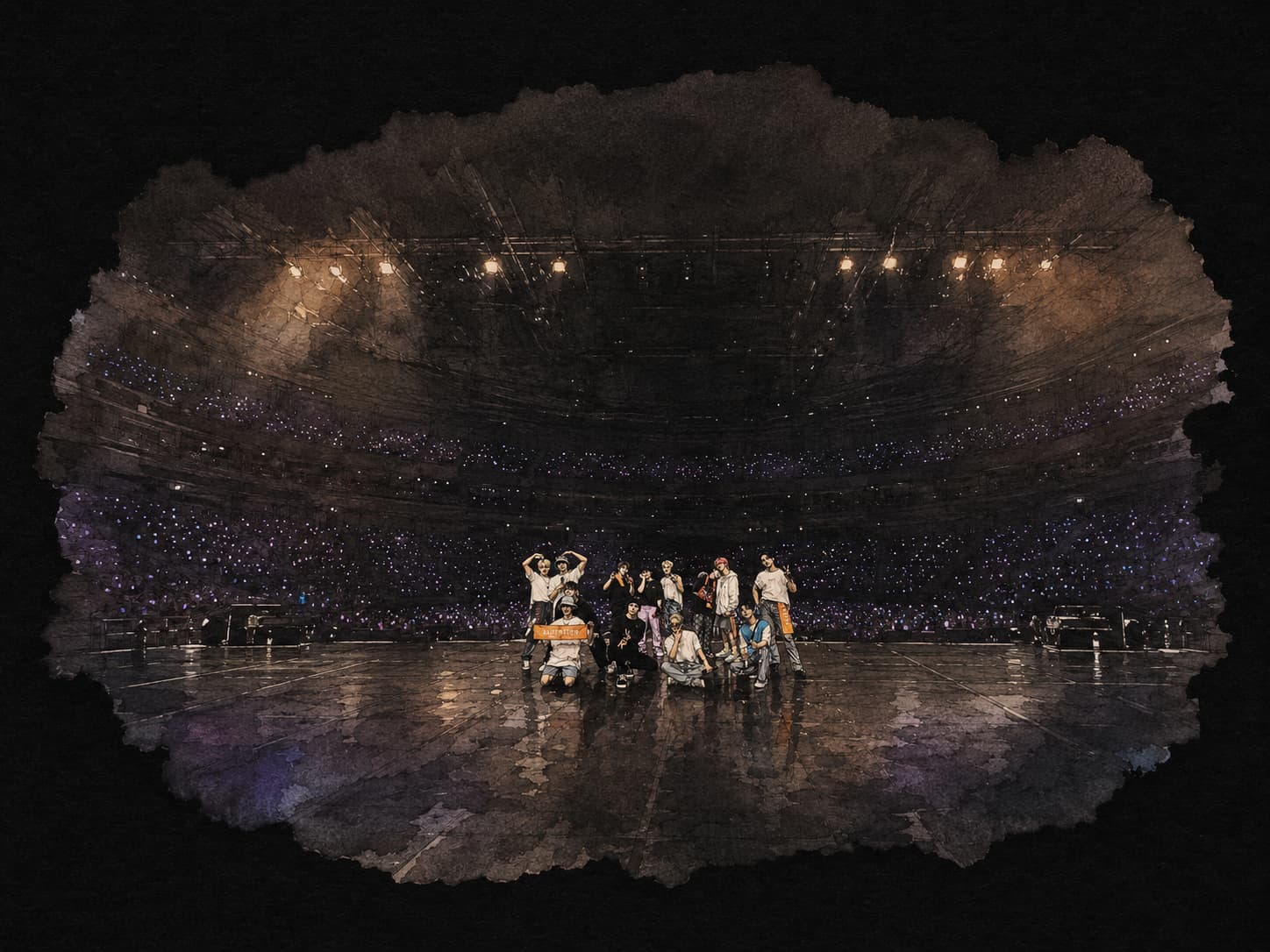
Six years ago, the Editor was living in Indonesia as an expat — working, raising a family, and doing what most people do when they land in a country they’ve never lived in before: figuring it out one day at a time.
To help with childcare, the family hired a nanny. Her name was Ana. She was in her twenties, sharp, fluent in English, and — as the interview had gone — she mentioned almost in passing that she could also speak Korean.
The Editor didn’t test that claim during the hiring process. The English interview went well. Ana moved in.
A few days later, Ana was talking with the child. In Korean. Confidently, naturally, with the kind of fluency that doesn’t come from classes — it comes from years of genuine immersion.
In four years of living in Indonesia, meeting hundreds of people, the Editor would encounter only a handful who spoke Korean at that level. Ana was in the top three.
“Ana — how did you learn Korean like this?”
She smiled. The answer was simple.
“In middle school, I discovered a Korean idol group called SEVENTEEN. I became a fan. I wanted to understand what they were saying in their songs and interviews — so I studied Korean on my own. That’s how I got here.”
A teenager in Jakarta. No Korean family. No Korean school. No exchange program. Just a deep enough love for a group of thirteen boys from Seoul that she taught herself an entirely different language to get closer to them.
The Editor had not followed Korean male idol groups closely since BTS. The name SEVENTEEN was unfamiliar.
Ana changed that. Through her, the whole family discovered SEVENTEEN — and the Editor’s son became a fan. A real one. When SEVENTEEN held concerts in Jakarta, the family bought tickets. (All hands on deck: phones, laptops, everyone trying simultaneously, because the tickets sell out in under sixty seconds.)
That is what SEVENTEEN does. That is the kind of fandom they build — quietly, deeply, in places and people you would never expect.
This is where the story starts.
K-Unpacked’s take: Ana’s story is not really a story about how good SEVENTEEN’s music is — plenty of great music doesn’t send a teenager down the road of self-taught fluency in a foreign language. What it points to instead is a specific kind of parasocial motivation that self-producing idol groups tend to generate more of than typical acts: the desire to understand the artist directly, unfiltered, rather than through a translated caption or a dubbed interview. SEVENTEEN’s thirteen members write, compose, and choreograph a large share of their own material (the group’s defining trait, covered later in this series) which means their interviews and behind-the-scenes content carry more of the members’ actual voice than a heavily managed act’s would. That is a small, structural reason why a fan in Jakarta with no Korean family and no exchange program might decide the songs were worth learning a language for.
📌 This is Part 1 of a 4-part SEVENTEEN series.
- Part 1 — Thirteen Strangers, One Vision ← you are here
- Part 2 — The Self-Made Machine
- Part 3 — Going Global
- Part 4 — The Empire of Seventeen
🏢 Pledis Entertainment: The Small Company That Bet Everything
Based on the time of SEVENTEEN’s debut, it is an unprecedented and rare case in the Korean entertainment industry for a small to medium-sized agency to elevate a multi-member rookie group of more than 10 members to the level of superstars.
In 2015, Pledis Entertainment was not a company anyone would have placed their bets on. They had After School and NU’EST on their roster — respected acts, but not industry giants. They were nowhere near SM, YG, or JYP in resources, reputation, or infrastructure.
What they had was a plan: build a self-producing boy group. Not a group that performed songs written by professionals behind closed doors. A group that would write, compose, choreograph, and produce its own work — from the inside out.
To do that, they needed thirteen specific people. And they found them in the most unlikely ways.
🎤 How Each Member Was Found
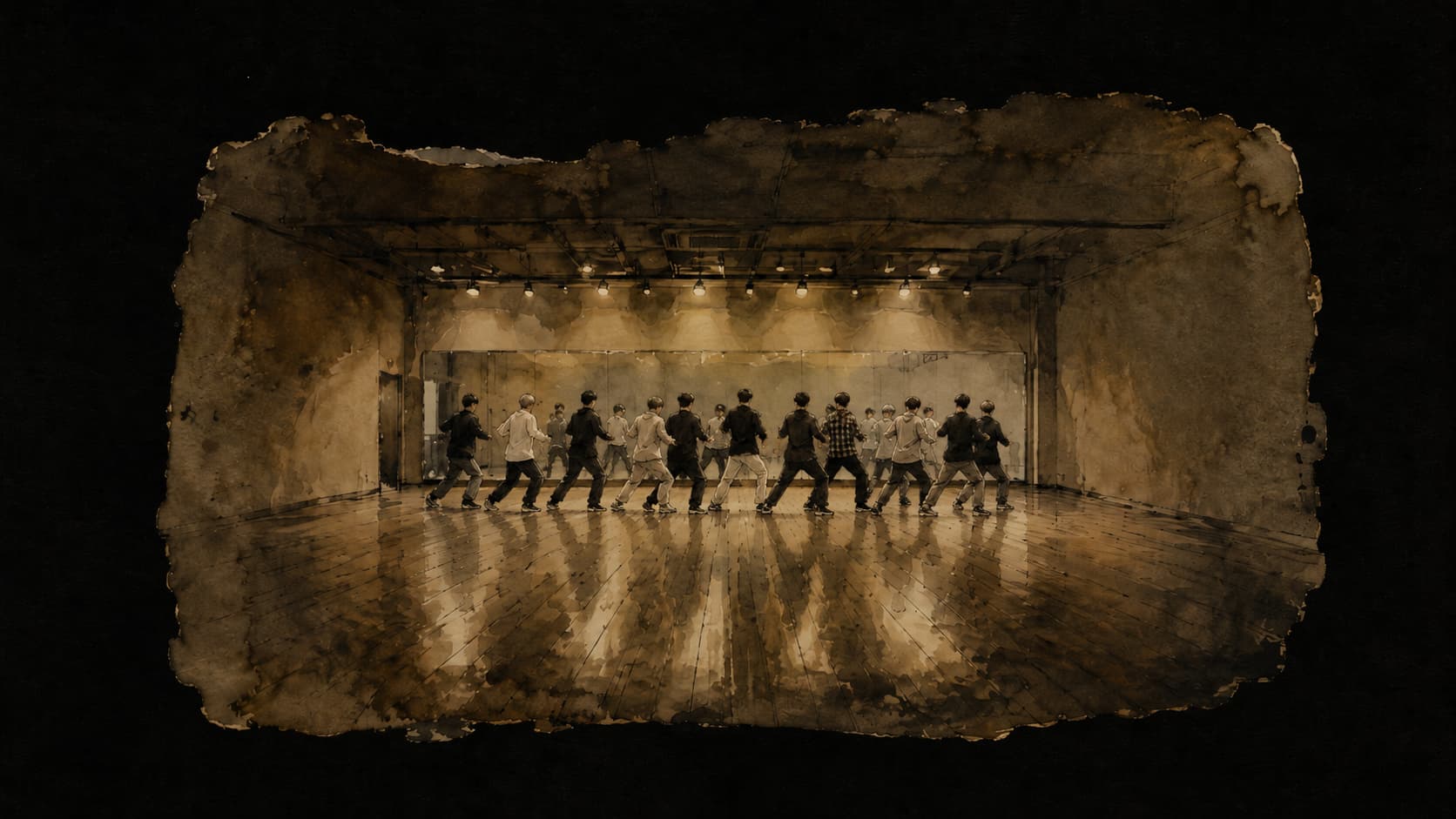 Thirteen members. Ten street-cast. Three auditioned. None of them planned to end up in the same group.
10 out of 13 people joined Pledis Entertainment through street casting, and all members successfully debuted in their first company.
Only three of SEVENTEEN’s thirteen members went through a conventional audition. The rest were found on streets, at subway stations, at dance competitions, online — in moments that were never supposed to change anyone’s life.
S.Coups (Choi Seung-cheol) — Daegu Street, 2010
S.Coups was discovered on the street by a Pledis casting agent and was a trainee for six years. The story CARАTs love: he was in the middle of soccer practice in Daegu — or more precisely, skipping out on it — when a Pledis casting agent spotted him on the street. A teenager who had been dreaming of becoming a physical education teacher was suddenly being asked if he wanted to be a singer. He auditioned on the spot, passed despite arriving late, and joined Pledis in May 2010. He was initially recruited as a vocalist. He ended up as the group’s overall leader and the leader of the Hip-Hop unit — six years of training before he ever stood on a debut stage.
💡 S.Coups’s stage name comes from coup d’état — a bold choice for a teenager who had barely started training. He’s carried the weight of leading 12 other people ever since.
Jeonghan (Yoon Jeonghan) — Subway Station, 2013
Jeonghan was scouted by Pledis Entertainment at a subway station. Before that moment, he had no particular ambitions in entertainment. Before joining the company, he was an ordinary student who dreamed of becoming a barista or early childhood teacher. He had briefly attended an acting academy — on a friend’s recommendation, not out of strong conviction — when a Pledis casting agent spotted him at a subway station and changed the direction of his life entirely. Jeonghan joined in 2013 and spent just two years as a trainee — one of the shortest periods in the group — before debuting as one of SEVENTEEN’s most distinctive vocal presences.
Joshua (Hong Jisoo) — Los Angeles, 2013
Joshua was in the United States and attended a festival where he was playing the guitar. They watched him for a month and cast him for his potential. Trainee duration: 2 years and 2 months.
A Korean-American from Los Angeles, playing guitar at a festival in Koreatown — not auditioning, just performing. A Pledis representative watched him for a month before making contact. Joshua moved from LA to Seoul to train at 17. He became SEVENTEEN’s bridge to English-speaking audiences, and his guitar has stayed with him throughout the group’s career.
Jun (Wen Junhui) — Shenzhen, China, 2012
In 2012, at sixteen, Jun moved to South Korea to train under Pledis Entertainment. The transition wasn’t exactly smooth. He’d spend his days at Korean language school, then head straight to the practice room at night to dance and sing.
Wen Junhui was born on June 10, 1996, in Shenzhen, Guangdong, China — which explains why he speaks both Mandarin and Cantonese fluently, in addition to Korean. He arrived at Pledis already experienced in acting: he had been a child actor in China since age two, winning the Best New Actor award at the Hong Kong Film Directors’ Guild Awards for his role in The Pye Dog (2007), and had played a young Ip Man in The Legend Is Born: Ip Man (2010).
In 2023, he returned to acting with a lead role in iQIYI’s Exclusive Fairytale, earning the Popularity Award at the Asia Contents Awards during the Busan International Film Festival. In 2025, he returned to films with a supporting role in The Shadow’s Edge, a joint production by China and Hong Kong, co-starring with Jackie Chan and Tony Leung Ka-fai.
Hoshi (Kwon Soonyoung) — Dance Competition, 2011
Hoshi once formed a dance crew called Deep Blue, and also won first place at a dance competition in Namyangju, his hometown. This allowed him to enter a province-wide competition, where he was noticed by a Pledis Entertainment casting member and invited to join the company in 2011. He trained for a total of 4 years before he debuted with SEVENTEEN.
Hoshi became the leader of SEVENTEEN’s Performance Unit — the architect of the group’s choreography. Every complex formation, every synchronized movement SEVENTEEN is known for runs through him.
Wonwoo (Jeon Wonwoo) — Open Audition, 2011
Wonwoo auditioned initially to get some experience, but he ended up being accepted. At first, he trained to become a singer, though he switched to rapping later on.
One of only three members who auditioned. He went in expecting nothing and came out as a future rapper with one of the most recognized voices in K-pop. He’s contributed to over 35 songs in SEVENTEEN’s discography, mostly for the Hip-Hop unit.
Woozi (Lee Jihoon) — Open Audition, 2011
Pursuing his love for music until high school, the aspiring idol went to an open audition organized by Pledis, where the competition rate is 300:1.
The 300:1 audition. Woozi didn’t think he was good enough — and passed anyway. He became the leader of the Vocal Unit, SEVENTEEN’s primary composer and producer, and the creative engine behind the group’s sound. Nearly every SEVENTEEN song you’ve heard has Woozi’s fingerprints on it.
DK (Lee Seokmin) — Open Audition, 2012
DK is the last member of SEVENTEEN that auditioned to join the company. He’d been taking vocal lessons for a while, and was able to get an audition with Pledis Entertainment through a mutual contact. He didn’t actually expect to be accepted, but of course, he won them over with his beautiful voice.
The third and final member who went through a conventional audition. DK became one of SEVENTEEN’s main vocalists — known for a voice so naturally expressive that fans often describe it as the emotional center of the Vocal Unit.
Mingyu (Kim Mingyu) — Street Cast (School), 2011
Mingyu was cast purely because of his visuals. He was apparently discovered while going home from school one day and asked to audition. He says that he thinks he was only chosen because the group still needed a visual member, but he’s definitely become a talented rapper.
Spotted on his way home from school. Four years of training later, Mingyu became a rapper, a main visual, and one of the most commercially visible members in the group — a regular on fashion brand campaigns and one of SEVENTEEN’s most active variety show personalities.
The8 (Xu Minghao) — Beijing Dance Academy, 2013
The8 took dance classes at Beijing Contemporary Music Academy, where he learned skills in dancing and breakdancing. It was here he was discovered by a Pledis Entertainment scout while he was breakdancing. He trained for just a year and 5 months before debuting, giving him the shortest training period of anyone in SEVENTEEN.
A breakdancer discovered mid-routine. The8 had the least trainee time of anyone in the group — and debuted as part of the Performance Unit anyway. Like Jun, he’s Chinese-born, and has maintained a parallel career as a fashion icon and model in China throughout SEVENTEEN’s run.
Seungkwan (Boo Seungkwan) — Discovered Online, 2012
Seungkwan was discovered online. He took part in a singing contest while living on Jeju Island, and his teacher at the time filmed the video and uploaded it. Pledis Entertainment’s staff discovered the video and sent him a private invitation to audition. Seungkwan trained for 3 years and 2 months before he debuted with the group.
He thought the private invitation was a scam. It wasn’t. Seungkwan — born on Jeju Island, the only member from Korea’s southern island — became SEVENTEEN’s most instinctively funny and emotionally open presence. His ability to hold a stage alone, whether as a vocalist or an entertainer, is widely considered one of SEVENTEEN’s secret weapons.
Vernon (Choi Hansol) — Subway Station, 2012
Vernon was apparently cast while he was hanging out at the subway station in front of his school. Interestingly, he actually joined the company as a vocalist but later became a rapper instead.
A Korean-American, like Joshua — spotted outside his school subway station by a casting agent who had no idea the teenager in front of them would become a global K-pop star. Vernon became a core member of the Hip-Hop Unit, known for a delivery that blends Korean and English with a fluency that reflects his bicultural upbringing.
Dino (Lee Chan) — Dance Competition, 2012
Dino was cast at a dance competition. Both his parents are dancers and he showed much potential ever since he was young.
The youngest member (maknae) of SEVENTEEN. Born into a family of dancers, spotted at a competition. Dino debuted at 15, grew up inside Pledis, and has since become one of SEVENTEEN’s most technically accomplished dancers and a solo performer in his own right.
📋 All 13 Members at a Glance
| Member | Unit | From | How Found | Training |
|---|---|---|---|---|
| S.Coups | Hip-Hop | Daegu | Street cast (soccer practice) | 6 years |
| Jeonghan | Vocal | Hwaseong | Subway station cast | 2 years |
| Joshua | Vocal | Los Angeles | Festival performance | 2 years |
| Jun | Performance | Shenzhen, China | Self-initiated | 3 years |
| Hoshi | Performance | Namyangju | Dance competition | 4 years |
| Wonwoo | Hip-Hop | Changwon | Open audition | 4 years |
| Woozi | Vocal | Busan | Open audition (300:1) | 5 years |
| DK | Vocal | Gyeonggi | Open audition | 2.5 years |
| Mingyu | Hip-Hop | Gyeonggi | Street cast (school) | 4 years |
| The8 | Performance | China | Dance academy scout | 1.5 years |
| Seungkwan | Vocal | Jeju | Discovered online | 3 years |
| Vernon | Hip-Hop | Seoul | Subway station cast | 3 years |
| Dino | Performance | Yongin | Dance competition | 3 years |
📛 What Does “SEVENTEEN” Actually Mean?
Thirteen members. Not seventeen.
The group’s name comes from a simple equation: 13 members + 3 units + 1 team = SEVENTEEN.
The three units — Hip-Hop Team, Vocal Team, Performance Team — each have their own leaders (S.Coups, Woozi, Hoshi) and their own creative lanes. The “1 team” is what holds them together: SEVENTEEN as a whole, functioning as a single unit despite being built from three different musical identities.
The group was planned to debut with 17 members with an average age of 17, but 4 did not end up debuting. The name survived the lineup change. Mathematically, it tells you exactly how the group is structured. Emotionally, it tells you something about how they think: organized, intentional, built around a system.
Named after the measurement unit for diamonds, CARAT — their fandom name — is a reference to their debut EP 17 Carat and its opening song “Shining Diamond.” CARАTs are the fans who give SEVENTEEN their shine.
📺 Seventeen TV: The Debut Nobody Could Ignore
Before SEVENTEEN debuted, Pledis did something unusual: they put the trainees on camera.
From 2012 till 2014, Seventeen appeared in regular live broadcasts of a show called Seventeen TV on an online streaming platform — detailing the label’s preparation for a new boy group. Trainees came and went from the project throughout the years.
This meant that by the time SEVENTEEN debuted, a core group of fans had already been watching them for years — not as finished performers, but as real teenagers in a practice room, figuring things out. The bond between SEVENTEEN and CARAT was built before the first song was ever released.
The show ended with a one-hour live showcase on May 26, 2015, making SEVENTEEN the first male K-pop group to debut with a broadcast event like that.
The debut EP, 17 Carat, was released the same day. It became the longest-charting K-pop album of the year in the US and the only rookie album to appear on Billboard’s “10 Best K-Pop Albums of 2015” list — for a group from a small company that nobody in the American music industry had been watching.
Despite having 13 members, there has been no member change in the 11 years since their debut. That stability — thirteen people, one lineup, no departures — is one of the most remarkable facts about SEVENTEEN. In a K-pop industry defined by lineup changes and member departures, SEVENTEEN has never lost anyone.
🎬 The Debut: May 26, 2015
| Debut Date | May 26, 2015 |
| Debut EP | 17 Carat |
| Label | Pledis Entertainment |
| Members | 13 (final lineup, unchanged to this day) |
| Fandom Name | CARAT |
| Billboard | Longest-charting K-pop album of 2015 in the US |
| Billboard recognition | Only rookie album on “10 Best K-Pop Albums of 2015” |
▶ Watch SEVENTEEN ‘Adore U’ debut MV on YouTube
💭 Why Ana’s Story Matters
The Editor mentioned Ana’s story at the beginning of this post. It’s worth returning to it at the end.
Ana was a middle schooler in Jakarta when she found SEVENTEEN. She had no Korean family, no Korean school, no special access to Korean culture beyond what the internet could provide. She heard the music, she felt something real, and she decided she wanted to understand every word of it. So she learned the language.
By the time the Editor met her, years later, she was speaking Korean at a level that surprised a native speaker living in Indonesia.
K-pop’s global reach is often described in streaming numbers and YouTube views — in billions and hundred-millions. But the real measure of it is Ana: a young woman in Jakarta who taught herself an entirely new language because a group of thirteen boys from Korea made music that mattered enough to her.
That is what SEVENTEEN builds. Not just fans. People who go all the way.
🔗 Continue the Story
- 👉 Part 2 — The Self-Made Machine — How SEVENTEEN’s self-production system works, and why it changes everything
- 👉 Part 3 — Going Global — World tours, Billboard records, and the global CARAT network
- 👉 Part 4 — The Empire of Seventeen — 25M albums, daesangs, and 2025~2026