Now Hot in Korea: RESCENE, the Rookie Group Everyone Suddenly Wants to Root For
How RESCENE became one of Korea's most talked-about rookie girl groups through Woni's viral YouTube channel, Minami's gyaru character, regional dialects, and an unexpectedly wholesome underdog story.
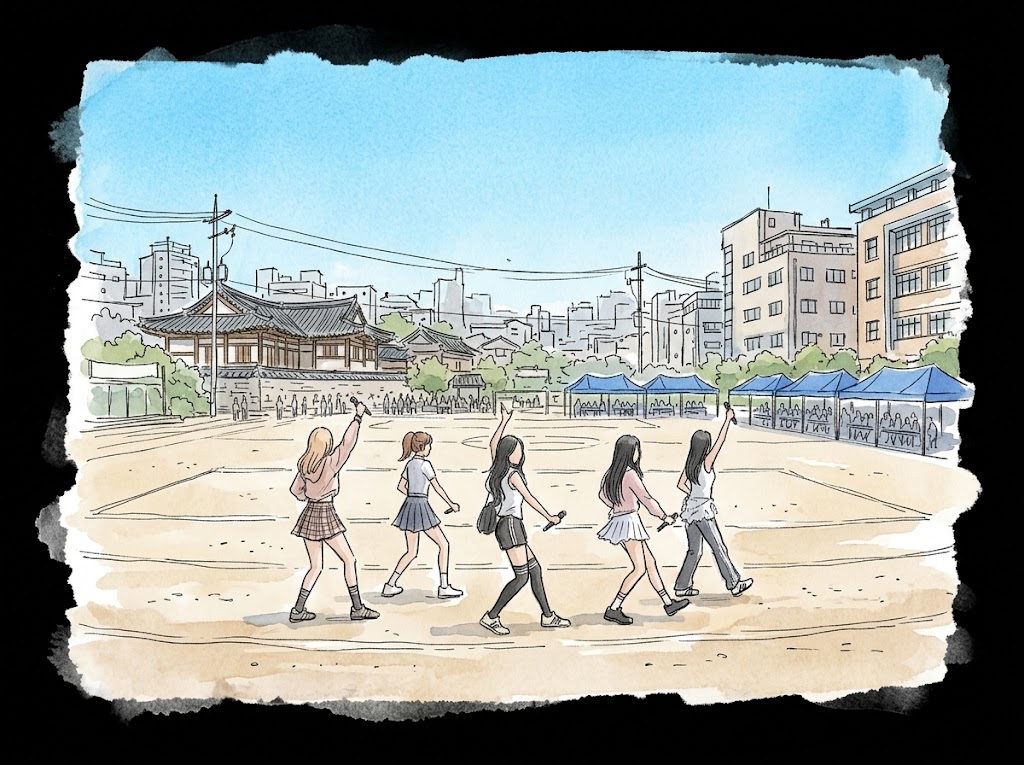
Every year, dozens of new K-pop groups debut.
Most arrive with polished teaser films, carefully planned concepts, and a long list of reasons why the public should pay attention.
RESCENE (리센느) became interesting for almost the opposite reason.
People started watching them because they were funny. Then they kept watching because the members seemed genuinely close. Somewhere along the way, viewers who had never heard a RESCENE song began hoping that the group would succeed.
RESCENE is still too early in its story for a Part 1, Part 2, and Part 3 retrospective.
This is simply an introduction to the rookie girl group that this editor has been having far too much fun watching lately — and one of the fastest-rising idol stories in Korea right now.
K-Unpacked’s take: RESCENE is interesting less as a group and more as a case study. Their rise is happening through the opposite playbook from most rookie K-pop marketing, and understanding why that playbook is working right now, in Korea, in 2026, tells you more about where K-pop is heading than any chart number could.
🎯 Why This Is Different From the Usual Rookie Playbook
Most rookie groups in Korea live or die in their first three months. A big-budget teaser campaign creates a spike of attention, a title track either catches on or does not, and by month four the group has either secured a fandom base or quietly become one of the dozens of debuts that year that nobody outside hardcore K-pop communities remembers.
RESCENE broke that timeline.
They did not go viral in month one. The channel that built their fanbase, Woni’s road-trip-style vlog, took time to accumulate an audience the slow way: episode by episode, joke by joke, without a single “moment” that got clipped and pushed through algorithmic feeds overnight. That is unusual. Most of the small-agency groups this editor has watched debut and fade in Korea over the past few years tried to compress that same slow-build strategy into a two-week promotion cycle, because that is all the marketing budget allowed for. RESCENE’s team let it breathe for months instead.
There is a real difference between a big-agency debut and what RESCENE is doing, and it is not just budget. A group under a major label like HYBE or SM enters the market with infrastructure already built: an existing global fandom pipeline, guaranteed music-show slots, a professional variety-content team, and enough capital to absorb a slow first year without anyone panicking. A small agency like THE MUZE Entertainment has none of that safety net. Every video Woni posts, every stage RESCENE gets, has to work on its own, in real time, with a much smaller staff making the calls.
That constraint is exactly what makes RESCENE’s content feel different. Big-agency content is produced to be unmissable. RESCENE’s content is produced to be survivable — and because of that, it ends up looking less edited, less coached, and more like five people who are actually figuring things out together. Korean viewers, this editor included, have gotten very good at spotting the difference between a “candid moment” a large agency greenlit for engagement and a candid moment that happened because nobody had the budget to reshoot it. RESCENE’s most viral clips read as the second kind.
That is also why the Korean online reaction to RESCENE shifted the way it did. Early comments under Woni’s channel were mostly about the individual gags — the dialects, Minami’s characters. Somewhere over the following months, the tone of the conversation in Korean fan communities changed from “this is a funny clip” to “I want this specific small company to succeed,” which is a much stronger and stickier form of attention than a viral moment usually produces. A joke gets you a view. An underdog story you believe in gets you a fan who shows up to the music-show recording.
🌸 Who Is RESCENE?
RESCENE is a five-member girl group under THE MUZE Entertainment, consisting of Woni, Liv, Minami, May, and Zena.
The group debuted in 2024. Its name combines the ideas of a scene and a scent: music that brings a vivid moment back to mind in the way a familiar fragrance can revive an old memory.
That is the official concept.
But the reason many Koreans are discovering RESCENE now has less to do with elegant perfume imagery and more to do with regional dialects, chaotic road trips, strange character acting, and a Japanese member who can turn almost anything into a comedy routine.
Their recent rise did not begin with a giant advertising campaign.
It began with a YouTube channel.
📺 The Channel That Changed the Story
RESCENE’s leader Woni (원이) is at the center of a YouTube channel with an intentionally long and slightly awkward name:
안녕하세요원이입니다잘부탁드립니다
Hello, I’m Woni. Nice to meet you.
▶ Visit Woni’s YouTube channel — 안녕하세요원이입니다잘부탁드립니다
The channel does not feel like a traditional idol variety show.
There is less emphasis on perfectly timed missions, forced reactions, or members loudly competing for screen time. Instead, the videos often feel like someone happened to bring a camera along while a group of unusually entertaining friends went on a trip.
The members eat, argue over small things, imitate one another, switch into regional dialects, and allow jokes to run for much longer than a television producer normally would.
That looseness is the appeal.
The channel gave viewers enough time to understand each member as a character. Woni became the warm, quick-witted leader from Geoje. Zena’s Gyeongju background became part of the group’s regional humor. Minami emerged as an unpredictable combination of musical talent, linguistic precision, Japanese subculture knowledge, and fearless physical comedy.
The channel did more than promote RESCENE.
It gave the public a reason to feel that they already knew them.
🔥 Woni, Geoje, and the Fire-Breathing Charmander Energy
 RESCENE’s appeal is not polished perfection. It is the feeling that the members might turn an ordinary conversation into complete chaos at any moment.
One of the most refreshing parts of the channel is how naturally the members use their hometown identities.
Woni is from Geoje, a coastal city in South Gyeongsang Province. Zena is from Gyeongju in North Gyeongsang Province. When the members become excited, their regional accents become stronger, and the tone shifts from standard idol speech into something warmer, rougher, and much more familiar to Korean viewers.
K-pop idols have traditionally been encouraged to smooth out regional accents after moving to Seoul. RESCENE often does the opposite. Their dialects are not treated as something to correct; they become part of the comedy and part of the members’ charm.
Woni, in particular, has the energy of someone who can begin a sentence as a responsible group leader and end it by setting the entire room on fire metaphorically.
That contrast — dependable leader on stage, chaotic hometown friend off stage — has made her an unusually effective center for the channel.
💄 Minami: The Japanese Member Korea Cannot Stop Watching
If Woni’s channel opened the door, Minami may be the member who made the largest number of casual viewers stay.
Minami is Japanese, but her Korean is so natural that viewers frequently forget she is speaking a second language. She catches small linguistic nuances, reacts quickly to wordplay, and switches comfortably between sincerity and absurd character acting.
She also has absolute pitch, which gives her an unexpected musical superpower beneath all the comedy.
But the character most closely associated with her recent popularity is the gyaru.
Gyaru is a Japanese youth fashion and lifestyle subculture associated with dramatic makeup, expressive styling, slang, confidence, and a playful rejection of conventional expectations. Rather than presenting it as a dry cultural explanation, Minami turns gyaru into performance.
She exaggerates the expressions. She commits fully to the voice. She dances as if embarrassment is a problem that belongs to other people.
And Korean viewers love her for it.
🪩 The Para Para Dance That Became a Character
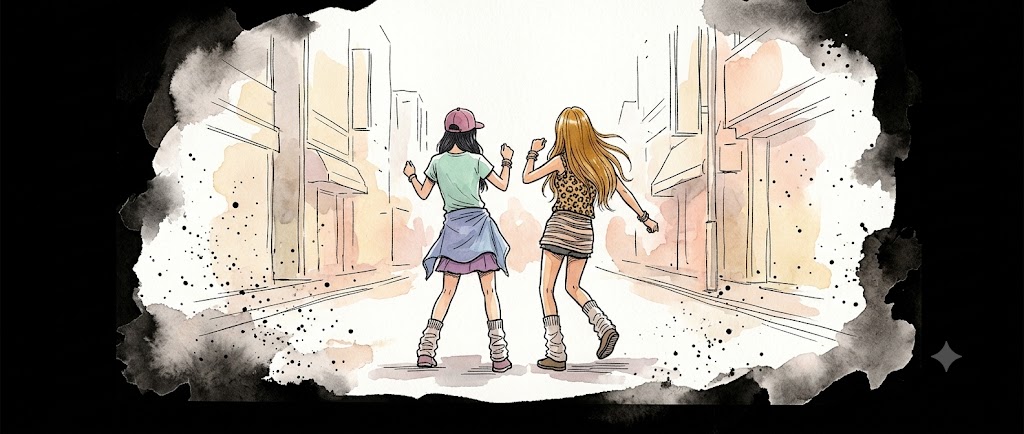 Minami does not merely explain gyaru culture. She turns it into a full-body comedy performance.
One of Minami’s most memorable recurring bits involves para para, the synchronized Japanese dance style closely associated with Eurobeat and late-1990s to early-2000s gyaru culture.
The movements are often concentrated in the arms and hands, performed with sharp repetition and a deliberately energetic expression. In Minami’s hands, however, para para becomes something between a dance lesson, a sketch-comedy character, and a supernatural event.
The joke works because she never performs it halfway.
She commits to every gesture as though the entire future of Japanese-Korean cultural exchange depends on it. The other members react with the mixture of confusion and acceptance that only close friends can achieve.
That dynamic has helped Minami avoid becoming popular simply as “the foreign member who speaks Korean well.” She has built a clear comic identity while still revealing serious skills underneath it: language ability, musicality, timing, and the confidence to carry a scene.
🏢 A Small Company People Can See Working
RESCENE’s agency, THE MUZE Entertainment, is not one of the giant K-pop companies with an international infrastructure already waiting for every new group.
That limitation has become part of the story.
Viewers frequently see an organization that appears to be solving problems in real time. Executives and staff do not feel distant from the members’ daily work; they seem visibly involved in schedules, content, transportation, promotion, and whatever else needs to happen.
For fans, this creates an underdog narrative that feels unusually tangible.
The members are not presented as products emerging from an untouchable corporate machine. They look like five young performers supported by a relatively small team whose leaders and staff are also running alongside them.
Of course, viewers can never know everything about the internal reality of an entertainment company from edited content alone.
But the public image is powerful: a small company and a rookie group trying to make something work together.
🤝 Why Their Friendship Matters
Idol groups are expected to say that their members are like family.
RESCENE is gaining attention because viewers can see the smaller, less dramatic signs of closeness.
They know how far they can push a joke. They understand when another member is becoming embarrassed. They tease one another without making the atmosphere feel cruel. When one member becomes the center of attention, the others usually seem amused rather than threatened.
Their chemistry feels less like a promotional statement and more like accumulated time.
That matters because the channel’s humor depends on trust. Minami can perform an absurd gyaru character because the members around her know how to react. Woni can lose control of a situation because someone else will catch the rhythm. Regional dialect jokes work because nobody treats a member’s background as something inferior.
The group is entertaining because the members appear comfortable enough to be unpolished around one another.
🏆 The First Win That Completed the Narrative
When RESCENE earned its first music-show win, the members cried.
It was not a carefully controlled emotional moment. It looked like the release of everything that had accumulated behind the scenes: the uncertainty of debuting under a smaller agency, the pressure of trying to be noticed, and the strange experience of suddenly realizing that people outside the existing fandom were now paying attention.
For viewers who had discovered them through Woni’s channel, the win felt like the conclusion to a story they had joined midway through.
The funny girls from the road-trip videos were still funny.
But now they were standing on a music-show stage, overwhelmed because their work had finally produced something concrete.
That moment strengthened the image that now surrounds RESCENE in Korea:
They seem like kind, sincere people who are trying very hard — and who still cannot quite believe that things are beginning to work.
It is an extremely easy story to root for.
💭 Why RESCENE Is Rising Now
RESCENE’s rise is not proof that polished K-pop marketing no longer matters. Their music, styling, performances, and professional promotion remain essential.
But their recent momentum shows that audiences increasingly want more than perfection.
They want enough unstructured time to understand who the members are.
They want jokes that develop naturally instead of being announced with captions.
They want hometown accents, awkward silences, strange obsessions, staff members who appear to care, and friendships that do not feel like they were invented for a press release.
Woni’s channel created that space.
Minami’s gyaru and para para performances supplied the viral spark. The members’ dialects and chemistry gave people reasons to keep watching. The small-company narrative and emotional first win gave the story a heart.
RESCENE did not suddenly become interesting because the public was told that they were special.
The public spent time with them — and reached that conclusion on its own.
📊 What This Actually Says About K-Pop’s Small-Agency Groups
Living in Korea, this editor has watched a version of the RESCENE story happen and fail to happen many times before. Small-agency groups debut every year with a similar pitch — relatable members, a lower budget, a scrappy underdog framing — and most of them never break out of their existing fanbase. So the interesting question is not “why did people like RESCENE,” it is “why did this particular small-agency bet pay off when so many similar ones do not.”
Three things stand out, and none of them are about the music itself:
They let the channel run long enough to build actual characters, not just moments. Most small agencies cannot afford to wait, so they compress the “get to know the members” phase into a handful of clips and move straight to comeback promotion. RESCENE’s team let Woni’s channel run for months before the wider public caught on, which meant that by the time a clip did travel outside the existing fanbase, there was already a full cast of characters behind it for new viewers to fall into. A single viral clip with no backstory fades in a week. A viral clip that opens the door to months of existing content keeps people around.
The “small company” framing was allowed to be visible instead of hidden. Most agencies treat limited resources as something to disguise. RESCENE’s content leans into it — staff visibly solving problems on camera, a leaner promotional machine than a major label group — and turns a resource gap into a narrative asset. That only works if the agency is confident enough to let the seams show, which is a real business decision, not an accident.
Regional identity was treated as charm, not something to smooth over. This is the detail that struck this editor most directly. Korean idol training has historically pushed toward a neutral, Seoul-standard way of speaking, and dialects have usually surfaced only as an occasional, slightly self-conscious punchline. RESCENE’s members lean into their Gyeongsang-region accents on camera, unfiltered, and Korean audiences responded to that authenticity rather than being put off by it. That is a genuinely different choice from how most agencies have handled regional identity, and it is one worth watching other rookie groups copy over the next year or two.
None of this guarantees RESCENE a long career — plenty of groups with a great debut story still fade once the promotional cycle ends and the music has to carry things alone. But as a case study in how a small-agency group can actually out-maneuver bigger budgets on attention, RESCENE is one of the more instructive examples working in Korea right now.
💬 Editor’s Note
RESCENE is still a rookie group, so this is not the moment for a grand career retrospective.
It is simply the moment to say: something fun is happening here.
Start with Woni’s YouTube channel. Watch the members visit Geoje, listen to the dialects become stronger, and wait for Minami to transform an ordinary room into a gyaru para para stage.
You may arrive without knowing a single RESCENE song.
There is a good chance you will leave wanting these five people to win.