Editor's Pick: Christmas in August, the Quiet Film That Changed Korean Romance
A personal walk through Christmas in August (1998), the understated Hur Jin-ho debut the Editor calls a true turning point for Korean romance.
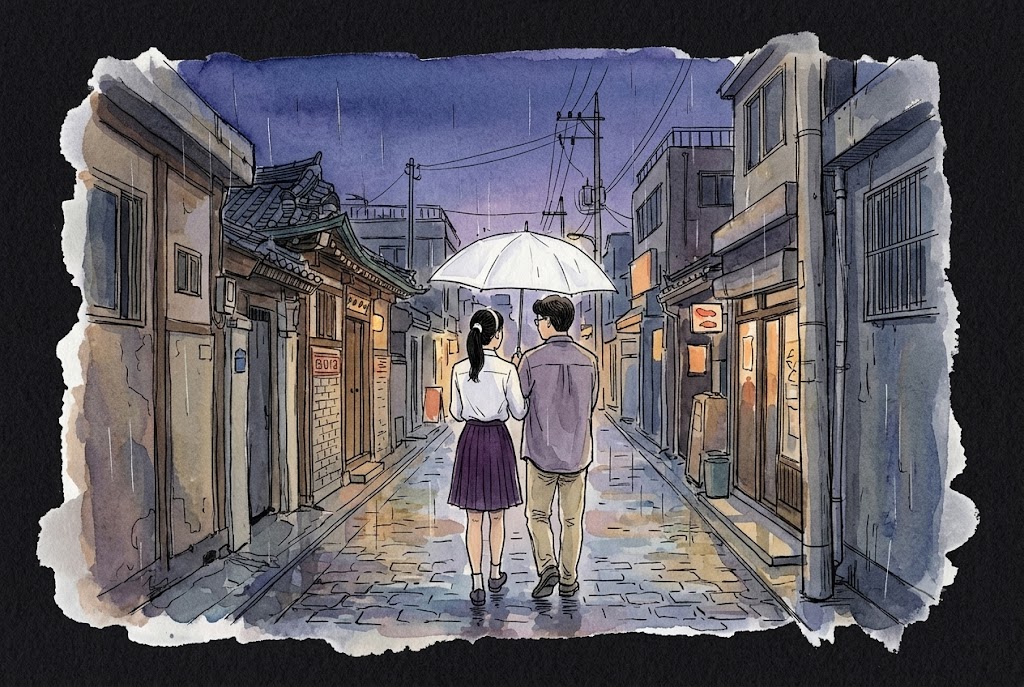
⚠️ Full spoilers. This is a personal walk through the entire film, including its ending.
A Film the Editor Has Watched Three or Four Times
Christmas in August came out in 1998, back when the Editor was still in high school. Watching it feels like falling in love and losing something at the same time. By the final scene, your chest just feels heavy. Quiet, but heavy.
This was director Hur Jin-ho’s very first film. And it did not feel like the melodramas Korean audiences were used to at the time. Those older films often leaned hard into tears, big emotional outbursts, loud grief. Christmas in August refused all of that.
The Editor won’t claim this was literally the first restrained Korean love story ever made. But it is fair to call it one of the clearest turning points, the film that helped push Korean melodrama away from loud, tearful sentimentality and toward something quieter and more modern.
A Small Photo Studio, A Simple Premise
The story follows Jung-won, played by Han Suk-kyu, a photographer in his mid-thirties running a small neighborhood photo studio that has been passed down through his family. His days are filled with small, repeated moments: a teenager begging him to enlarge a photo of his crush, a customer asking him to restore an old faded picture, an elderly woman coming in alone to have her own memorial portrait taken, and a young traffic officer bringing in daily parking-violation photos to be developed.
That traffic officer is Da-rim, played by Shim Eun-ha. She starts visiting the studio often. Slowly, without either of them saying much, something begins growing between them.
What Da-rim does not know is that Jung-won is terminally ill. The film never explains what the illness actually is. That vagueness is intentional. This is not a story about a disease. It is a story about how someone quietly prepares to leave, while still letting a little bit of light in before they go.
The studio itself starts to feel like more than just a workplace. Young love, fading memory, and death all pass through the same small room. It works almost like a waiting area between life and whatever comes after.
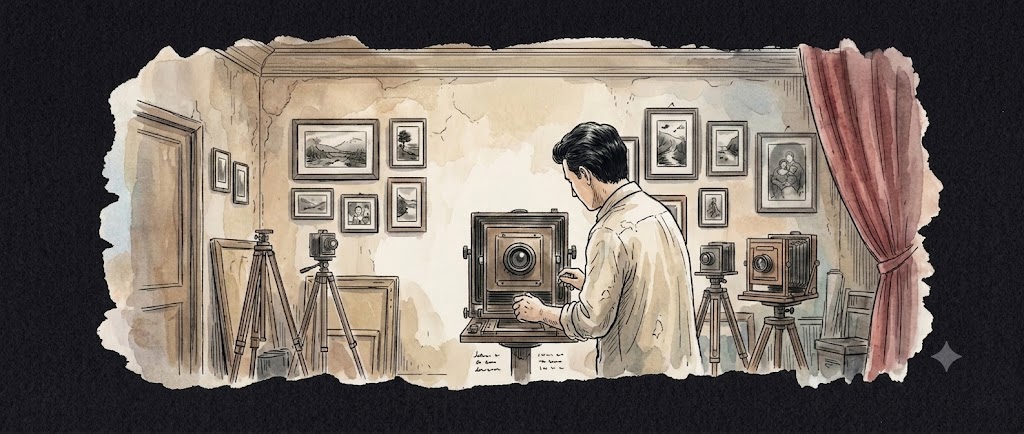 A small studio window becomes the emotional center of the entire film.
▶ Watch Christmas in August Trailer on YouTube
A Movie That Manages Your Emotions, Until It Can’t
Here is the thing the Editor keeps noticing on every rewatch. Right when a scene gets close to unbearable, right when your eyes start to sting, the film cuts away.
But that restraint is not total, and it shouldn’t be read that way. There is one scene where Jung-won’s composure fully collapses. After a night of drinking with old friends, he ends up at a police station and breaks down, yelling and crying in a way that feels completely out of character for him. It is one of the only moments the film lets his fear and grief spill out in the open, and it matters precisely because it is so rare.
The film also shows Jung-won’s restraint in a quieter, more specific way: he sits down and writes out step-by-step instructions so his aging father can operate the studio’s photo-developing equipment after he’s gone. It’s not a grand gesture. It’s a set of written directions. And that is exactly the kind of love this film keeps returning to, care expressed through preparation rather than words.
Two People Who Rarely Say What They Mean Out Loud
Across most of the film, Jung-won and Da-rim never directly tell each other how they feel. Instead, the Editor finds all of it in the tiny things: how Jung-won lingers a little too long fixing her a chair, how Da-rim keeps finding small excuses to stop by the studio, how a shared can of coffee outside on a bench says more than a long conversation ever could.
But “restraint” does not mean the love is left completely unspoken, and it does not mean Jung-won’s silence is free of consequences. As his health worsens, he makes a difficult choice: rather than explaining his illness to Da-rim, he simply disappears from her life, closing the studio and cutting off contact. It is meant as an act of protection, sparing her the weight of watching him die. But from Da-rim’s side, it looks like abandonment. She keeps returning to the locked studio, leaves notes, and at one point, furious and hurt, throws a rock through the shop window.
That detail matters. It means Jung-won’s silence is not simply beautiful self-sacrifice. It has a real cost, and that cost falls on Da-rim, who is left to interpret his disappearance as rejection with no explanation at all.
The Ending: A Photograph Left Behind
By winter, Jung-won has died. Da-rim passes by the closed studio again and stops in front of the display case. Among the sample photos, she finds her own portrait, quietly placed there before Jung-won’s death.
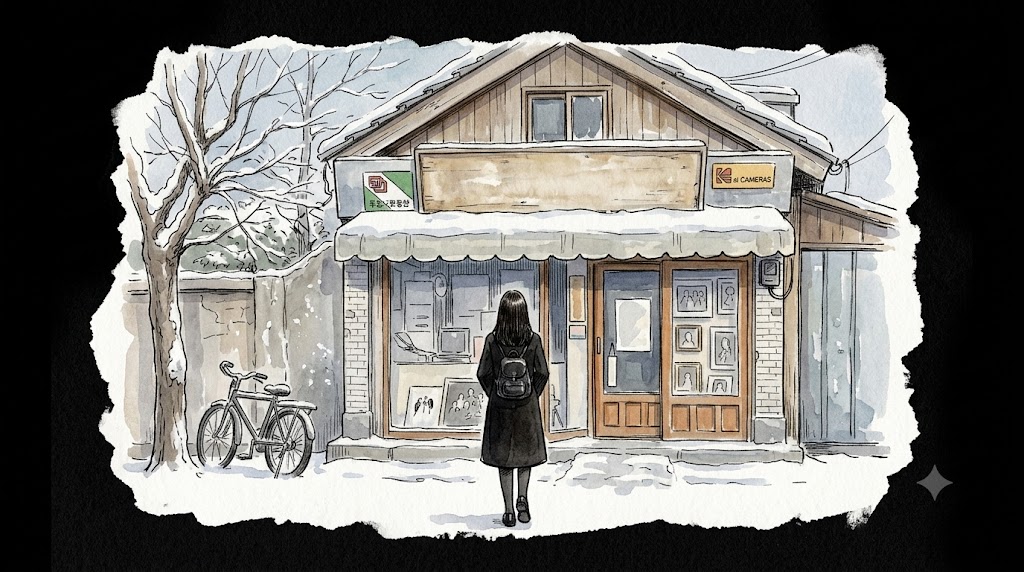 A single photograph in a window becomes the film’s most quietly devastating scene.
The film also gives Jung-won a closing voice-over, the one place where his feelings are finally put into words rather than left implied. In it, he reflects that love fades the way old photographs do, but tells Da-rim that she will stay fixed in his memory exactly as she was, and thanks her before saying goodbye.
So the photograph in the window reads like a quiet confession, but it is worth resisting the urge to call it only that. It also works as Jung-won choosing his last memory, leaving a piece of himself inside the only world he had left to leave anything in, and a stand-in for the explanation he was never able to give her while he was alive. For Da-rim, finding it turns what had felt like unexplained rejection into a delayed, painful kind of understanding: she had been loved all along, she simply wasn’t allowed to know it in time.
Why This Story Still Lingers
Maybe this is a distinctly Korean way of thinking about love and restraint. But there is something about two people who cared for each other deeply, who never got the chance to build something lasting, not simply because fate ran out the clock, but because one of them chose silence over explanation. That kind of ending stays with viewers far longer than a story where everything gets resolved cleanly.
The Editor thinks that is Christmas in August’s real achievement. It isn’t only a film about love expressed without words. It’s also a film about what silence costs the person left behind, how an act meant as kindness can still land as pain. The photograph in the window is beautiful because it finally says what Jung-won couldn’t. It’s devastating because it arrives only after there is no one left to answer it.
For anyone curious about the roots of Korean melodrama, Christmas in August is a great place to start; you can see its fingerprints in a lot of the restrained, bittersweet romances that came after it.
Rating: 9.3 / 10
A personal note from the Editor. Some films make you cry. This one makes you go quiet instead. Almost thirty years later, I still think about that photograph in the window more than almost any other ending in Korean cinema.