Twenty-Five Twenty-One Review: The Spring We Thought Would Last Forever
A personal deep dive into Twenty-Five Twenty-One: the IMF years, a fencer and a reporter, a Jaurim song, an old diary, and why the ending still hurts so softly.
⚠️ Full spoilers. This post talks about the whole story, including the ending. If you have not finished all 16 episodes, save this one for later.
I Was Late. Maybe That Was the Point.
This drama sat on my “to watch” list for a very long time. Years, really.
I finally watched it this autumn. Two weeks, one episode at a time. Outside, Seoul was turning cold. The wind got thin. The ginkgo trees started dropping yellow leaves on the sidewalk.
I think the season mattered. Twenty-Five Twenty-One is a spring story. It is bright, loud, and full of running. But I watched it in the fall, when you naturally look back. So every happy scene felt a little sad. Every laugh came with a small ache.
By the last episode, I knew. This one goes on my short list of life dramas. It sits right next to My Mister and Goblin.
Here is why.
The Basics
| Korean title | 스물다섯 스물하나 (Seumuldaseot Seumulhana) |
| Aired | tvN, February 12 – April 3, 2022 (16 episodes) |
| Streaming | Netflix |
| Writer | Kwon Do-eun |
| Director | Jung Ji-hyun |
| Main cast | Kim Tae-ri (Na Hee-do), Nam Joo-hyuk (Baek Yi-jin), Bona (Ko Yu-rim), Choi Hyun-wook (Moon Ji-woong), Lee Joo-myung (Ji Seung-wan) |
| Big award | Kim Tae-ri won Best Actress (TV) and the Popularity Award at the 58th Baeksang Arts Awards (2022) |
1998: The Year Everything Broke
The story opens in 2021. A teenage girl named Min-chae quits ballet and runs to her grandmother’s house. There, she finds her mother’s old diary from 1998.
Then we jump back.
In 1998, Korea is in deep trouble. Koreans call it the “IMF crisis.” Big companies collapsed. Some banks were shut down. Jobs disappeared, and many families saw their lives change with shocking speed. Ordinary people even brought out their gold rings and necklaces in a nationwide “gold collection” drive. The gold was sold abroad to help bring dollars back into the country.
Na Hee-do is 18 (in Korean age). She is a high school fencer. Her school shuts down the fencing team because there is no money. To her, this is the end of the world.
Baek Yi-jin is 22. His father’s company has collapsed. His family is broken apart. He went from rich kid to newspaper delivery boy in one season.
So here are two young people. One is losing her dream. One has already lost his whole life. And they meet.
What I love is how the drama sets this up. Hee-do thinks the crisis is “grown-up stuff” that cannot touch her. Yi-jin knows better. He has already been touched. That gap between them is the heart of the show. She teaches him to hope again. He teaches her that the world is bigger than a fencing mat.
A Heroine Born the Year I Was Born
A personal note from the Editor.
Na Hee-do was born the same year I was. That one small fact changed how I watched everything.
The pagers. The PC chat rooms. The cassette radios. The news about the IMF on every TV in every home. I was there. I was that age. When Hee-do worried about school and her friends and her future, I remembered my own worries from the same years.
It felt less like watching a drama and more like opening a window into my own twenties.
This is something global fans may not feel the same way. For many Korean viewers in their forties, this show is not “retro.” It is memory. The props are not cute decorations. They are the things we actually held in our hands.
Not Just a Love Story
Yes, there is a romance. And it is a beautiful one. But the drama is really about how young people face hard times.
Look at how each character deals with pain:
- Hee-do loses her team, so she transfers schools and chases her hero. She does not wait for permission. She just runs.
- Yi-jin loses his family’s fortune, but he refuses to be bitter. He works. He apologizes for things that were not even his fault. Later, he becomes a sports reporter.
- Ko Yu-rim, Hee-do’s rival, carries her poor family on her back. In the end, she makes a hard choice. She becomes a Russian citizen and fences for Russia. Many call her a traitor. The drama asks us to look closer.
- Ji Seung-wan stands up to a violent teacher and pays a price. She does not back down.
- Moon Ji-woong is the funny one, but even he has his own quiet loneliness.
None of them have it easy. But none of them give up on each other. That is the humanism I kept feeling. The show never says pain is good. It says pain is easier when someone stands next to you.
The Love I Dreamed About in My Twenties
What makes Hee-do and Yi-jin special is not the kisses. It is the cheering.
They do not try to own each other. They try to make each other stronger. When Hee-do wins, Yi-jin is happy. When Yi-jin is down, Hee-do pulls him up. Their love is a kind of team.
A personal note from the Editor.
In my twenties, and honestly into my thirties, this is exactly the kind of love I dreamed about. Not the dramatic kind. The kind where two people say, “Your life matters. Go win. I am rooting for you.” Watching them, I felt understood. I also felt a little jealous of how clearly they knew what they wanted.
But here is the hard part. That same cheering is what pulls them apart.
Why They Don’t End Up Together
This is the part that made many viewers angry. Hee-do and Yi-jin break up.
Yi-jin becomes a reporter. Then the 9/11 attacks happen, and he is the one sent to cover them. The work wears him down inside. Later, he takes a post as a foreign correspondent in New York.
Hee-do knows this feeling too well. Her mother is a busy news anchor. As a little girl, Hee-do spent years waiting for a parent who was always at work. Now the man she loves is walking down the same road.
Slowly, their cheering stops working. Each one tries to be strong for the other, but there is nothing left to give. In the end, they admit it. This love is not holding them up anymore. So they let each other go.
Why the Sad Ending Is the Perfect Ending
Many Korean viewers were angry about this. Korean TV audiences usually love a happy ending. Online, people argued for weeks.
A personal note from the Editor.
For me, this ending is perfect.
Think about it. For most people, love in their early twenties did not end with a wedding. It ended with a goodbye, and a little scar. We grew because of that pain. And some of us spend the rest of our lives quietly missing it.
A happy ending would have been sweet. But this ending touches something almost everyone has lived through. That is why it feels more complete than a usual happy ending ever could.
The way the drama says goodbye is also beautiful.
The diary takes a long road home. Back in their twenties, Hee-do loses her last diary. It ends up in Yi-jin’s hands, mailed to him because his ID card was tucked inside. Before he leaves for America, he asks the owner of the neighborhood book rental shop to give it back to her. But the owner forgets.
Decades pass. When the owner finally closes the shop, the diary turns up. He brings it to the house where Hee-do used to live. Her daughter, Min-chae, takes it and hands it to her mother.
Now the middle-aged Hee-do holds her lost diary again. She carries it to the tunnel where she and Yi-jin broke up. Inside, she finds the goodbye she wished she had said. And then she finds something she never knew was there. Yi-jin had written his own goodbye in her diary, all those years ago. The drama hides this from us until the very moment she opens it.
Then, standing in that tunnel, she rebuilds their farewell. This time, it is the goodbye they both deserved. The young Hee-do and Yi-jin cry, smile, and wish each other well.
To me, this scene is full of truth. It holds all the “I’m sorry” and “I wish” that two young people could not say back then. They were not bad at love. They just did not know how to end it yet. Years later, the drama gives them a second chance to say it right.
And it makes the drama’s title make sense.
A Song Title That Becomes a Whole Drama
The title comes from a song. Twenty-Five, Twenty-One is a 2013 song by the Korean rock band Jaurim, from their album Goodbye, grief.
The song looks back at a young love from far away. The narrator remembers being 25 and 21 with someone. They really believed that time would never end. Now, years later, the memory comes back on the wind, and it hurts in a sweet way.
I have loved this song for a long time. When I learned the drama used it as the title, I was happy and nervous at the same time.
Here is a fun bit of behind-the-scenes news. In 2024, Jaurim’s singer Kim Yuna said the drama team never asked her before using her song’s title. She only found out later. The team then sent her an apology and paid to use the song properly. So the drama’s soul came from her song, even if the paperwork came late.
A personal note from the Editor.
The Jaurim song plays only twice in the whole series. The first time is in Episode 2, early in their friendship. Yi-jin is having a terrible day, so Hee-do turns on all the water taps in the schoolyard and dances through the spray to cheer him up. They are not a couple yet. They are just starting to become each other’s hope. The second time comes near the end, when their love is slipping away. Same song. Two completely different feelings. That is the whole drama in one trick.
The line I love most is about the years they thought would last forever. That idea matches the tunnel scene near the end. The middle-aged Hee-do looks back on that time. She knows now that it did not last. But she does not regret it. It was short, and that is exactly why it shined.
▶ Watch ‘Jaurim – Twenty-Five, Twenty-One’ on YouTube
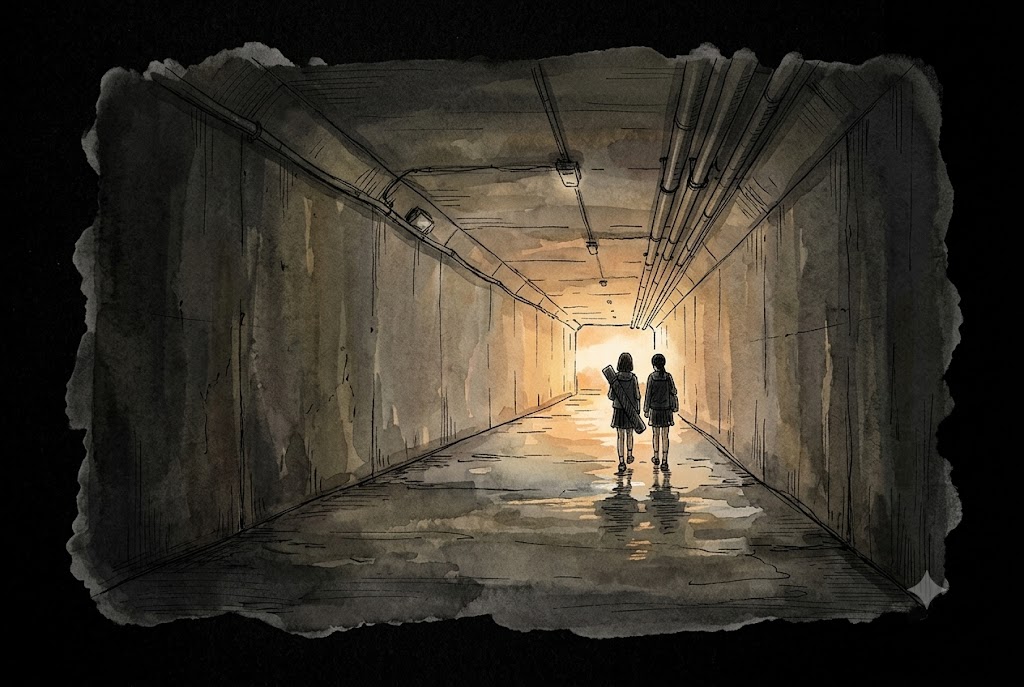 Some seasons feel endless only while we are inside them.
The Diary in My Parents’ House
The whole drama is framed by a diary. Min-chae reads her mother’s old pages, and the story comes alive.
Strangely, the same thing happened to me.
A personal note from the Editor.
Last weekend, I visited my parents. In an old box, I found my high school diary.
In those pages, my world was tiny. It was just school and after-school academy. That was it. But inside that small world, I felt everything. Worry. Pain. A racing heart. Pure happiness.
There were names written there that I cannot remember anymore. Not even their faces.
My notes from my twenties were the same. A first love that made my hands shake. Clumsy friendships. Choices I made badly because I had never made them before. And at the end, a goodbye, and tears I could not hold back.
Reading it now, I expected to feel embarrassed. Or full of regret. But I didn’t. Instead I thought: that young person was actually pretty wonderful. Brave, silly, and very easy to love.
This is what Twenty-Five Twenty-One gets so right. From far away, the things that filled our little world back then look small. Even childish. But they were not small to us. They were everything. And they were bright like spring.
The drama does not laugh at young people’s feelings. It honors them.
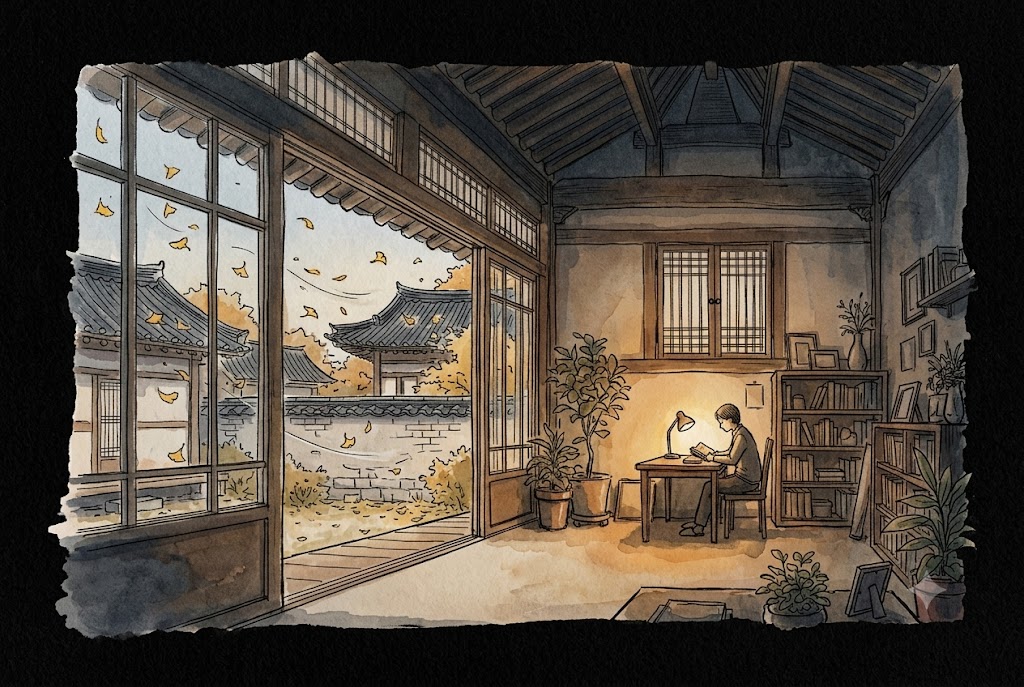 The names fade. The feelings don’t.
“Your First Love?” — The Last Scene That Got Me
The tunnel scene is not the very last thing we see. After the ending, there is one more short scene, like a cookie at the end of a movie.
Grown-up Yi-jin is trying to log in to a website. He forgot his password. The site asks him a security question: Who was your first love?
He types: Na Hee-do.
That is all. No music swell. No big speech. And yet it hit me harder than almost anything else in the show.
A personal note from the Editor.
It took me back to a night in my thirties. I was at a street-side tent bar (a pojangmacha) with old friends, drinking soju. Somebody asked, “What is a first love, really?”
One friend gave an answer I have never forgotten.
“Your first love is not the first person you ever said ‘I love you’ to. It is the person you loved the most when you were young. The one who taught you what real love feels like. That is your first love.”
Hee-do was not the first girl Yi-jin ever dated. Still, when the question comes, her name is the one he types. I think Yi-jin and my friend would get along very well. They seem to share the same idea of what “first” really means.
That tiny scene answers the question the whole drama has been asking. Did that love last forever? No. Did it matter forever? Yes. Those are two different things. And the drama knows it.
Why Korean Viewers Took It So Personally
For global fans, this is a lovely coming-of-age show. For many Koreans, it is something more.
The late 1990s were a wound for Korea. A whole generation grew up watching their parents lose jobs and homes. Dreams were put on hold. Many young people were told to be practical, not hopeful.
Twenty-Five Twenty-One goes back to that wound and does something kind. It says: even in the worst year, young people were still falling in love, still chasing medals, still laughing at 2 a.m. with their friends. The crisis was real. But so was the joy.
That is why the show feels like a warm hand on the shoulder. It is a thank-you letter to a generation that grew up too fast. If you want more on how hard times shaped Korean storytelling, our piece on Korea’s cultural power is a good next read.
The Actors Make It Real
Kim Tae-ri is the engine of the show. She was over 30 when she played an 18-year-old. You forget that within minutes. Her Hee-do is loud, stubborn, goofy, and fearless. She won Best Actress at the Baeksang Arts Awards for this role, and she earned every bit of it.
Nam Joo-hyuk plays Yi-jin with quiet sadness. He smiles a lot, but his eyes always look tired. That contrast is perfect for a young man carrying too much.
Bona (from the girl group WJSN) is a true surprise as Yu-rim. Her storyline might be the most painful in the whole show.
All five main actors are, honestly, beautiful to watch. Not just good-looking. Alive.
▶ Watch the ‘Twenty-Five Twenty-One’ Official Trailer on YouTube
Who Should Watch This
- Anyone who misses being young
- Anyone who is young right now and feels lost
- Fans of slow, warm, character-first dramas like My Mister
- Anyone who wants to understand Korea in the late 1990s through people, not textbooks
If you want more top-tier picks, see our K-Drama Top 10 rankings.
A Show I Want to Watch Again, With My Son
A personal note from the Editor.
My son is still in elementary school. When he gets to middle school, I want to watch this whole drama again, together with him.
I want him to meet these people. I want him to hear how they talk about losing, trying again, and cheering for someone else. I want him to know that being young is supposed to be messy. And that the mess is part of what makes it shine.
Honestly, the drama made me want to learn from these characters too. Even now. Even at my age.
Final Thoughts
Twenty-Five Twenty-One is not just about who ends up with whom. It is about a time in life that we all think will last forever. It never does. But the drama shows us that “not forever” does not mean “not real.”
The spring ends. The flowers fall. Yet years later, when the wind blows a certain way, you can still feel it.
I watched this in the fall. I think that was the right season after all.
Rating: 9.6 / 10
Related reading on K-Unpacked:
- My Mister: An Editor’s Masterpiece Walk
- Goblin Deep Dive
- K-Drama Top 10 Rankings
- Why Korea’s Cultural Power Keeps Growing
Sources: Twenty-Five Twenty-One – Wikipedia (cast, broadcast dates, writer/director); Kim Tae-ri – Wikipedia (Baeksang awards); SBS Star (Kim Yuna on the title, 2024); IMF speech, January 1998 (gold collection drive); Jaurim, “Twenty-Five, Twenty-One,” album Goodbye, grief. (released October 14, 2013).