Korea & Cultural Power: What a 1947 Memoir Says About 2026
Kim Gu once wrote that he wanted Korea to be known for the power of its culture, not its wealth or weapons. In 2026, the data suggests Korea may be closer to that dream than ever.
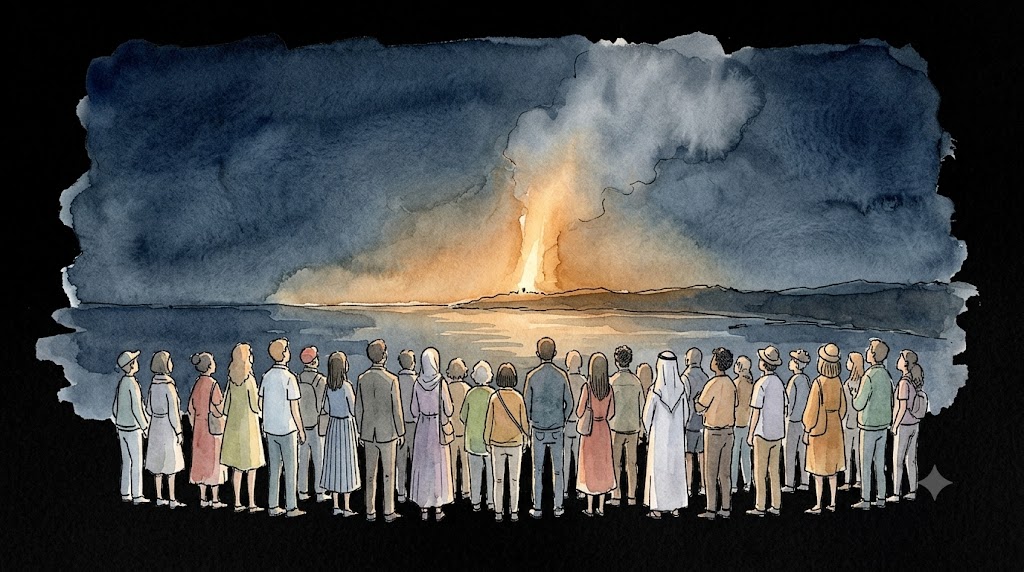
A personal note from the Editor.
In my twenties, I read a book called Baekbeom Ilji. It is the memoir of Kim Gu, one of the leaders of Korea’s independence movement during the Japanese occupation. Kim Gu spent years running the Provisional Government in Shanghai, trying to win Korea’s freedom back through diplomacy and, when that failed, through harder means.
Near the end of the book, he writes about the kind of country he actually wants Korea to become. It is not the part most people expect. He does not write about becoming rich. He does not write about becoming strong enough to fight back. He writes about wanting Korea to have “the power of a high culture” — because that kind of power, he says, makes a people happy, and then lets them give that same happiness to others.
I remember putting the book down and just sitting with that for a while. It felt like a strange thing for an independence fighter to want most. Not wealth. Not an army. Culture.
That memory came back to me a few weeks ago, while I was writing about Netflix numbers and soft power rankings for this blog. So today, I want to try something different from my usual posts. No trailers, no cast list, no rating at the end. Just one question: eighty years after Kim Gu wrote that passage, how close is Korea to the country he was describing?
What Kim Gu Actually Wanted
It helps to know the context. Kim Gu wrote Baekbeom Ilji in the 1940s, after decades of watching Korea get invaded, occupied, and used by stronger neighbors. He had every reason to want Korea to become powerful in the usual sense — a strong military, a wealthy economy, enough force that nobody could do to Korea what Japan had just done.
Instead, he wrote that he wanted just enough wealth to live comfortably, and just enough strength to defend the country, nothing more. What he wanted without limit was cultural power. His reasoning was simple: the world does not lack weapons or money. It lacks kindness, and compassion, and love between people. Culture is the one thing that can grow those qualities in people. He hoped Korea could become a source of that kind of culture — not by copying other countries, but by building something original enough that it could become an example for others.
Reading that as a young man, I thought it sounded beautiful but almost impossibly idealistic. A poor, divided, war-damaged country becoming a cultural example to the world? It felt like a wish, not a plan.
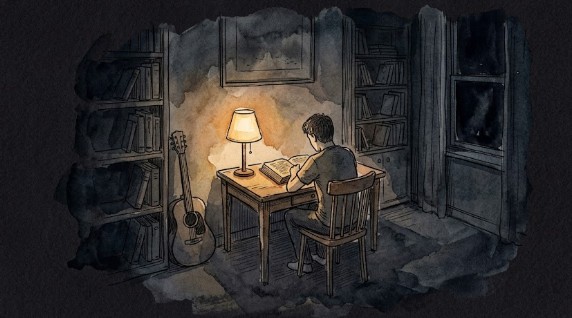
 Twenty-something me, a lamp, and a book that stuck with me longer than I expected.
Fast Forward to 2026: What the Numbers Actually Show
I did not want this post to just be a feeling. So I went and looked at what is actually happening with Korean culture around the world right now, in 2026. Here is what turned up.
Korea is climbing the global soft power rankings. Brand Finance’s 2026 Global Soft Power Index, which surveys more than 150,000 people across over 100 countries, ranks South Korea 11th in the world overall, up from 12th the year before. Korea now ranks 7th globally for entertainment specifically. The report credits this directly to K-pop, K-dramas, and K-beauty, backed by real government investment — Korea’s cultural agency spends more than $400 million a year supporting content exports.
Netflix viewing numbers back this up. In the first half of 2026, Netflix subscribers watched more than 97 billion hours of content worldwide, a record for the platform. Non-English content made up over a third of all that viewing, and Korean titles led every other non-English country. A separate Omdia industry report found that Korean shows generated 12.1 billion viewing hours on Netflix globally between April 2025 and March 2026 alone — second only to the United States, and well ahead of Japan and the UK.
People are learning the language, not just watching the shows. The King Sejong Institute, Korea’s government-run Korean language school network, now operates 273 locations across 89 countries as of mid-2026. In 2025, enrollment hit an all-time high of 239,020 students. That is not casual interest. Learning a language takes real time and effort, and hundreds of thousands of people around the world are choosing to spend it on Korean.
People are also getting on planes because of it. Industry and government researchers tracking Korea’s soft power strategy have estimated the country’s cultural exports at somewhere around $13 billion a year in recent years, and international visitor numbers have climbed into the tens of millions annually. Some of those travelers are coming for business or for Seoul’s skyline. But a meaningful share of them are coming because they watched a drama filmed on a specific street, or because they wanted to stand where a music video was shot. Culture, in other words, is not staying inside a screen. It is pulling people across oceans. (See the Sources section below for more on this research.)
And it is not only entertainment. In 2024, author Han Kang became the first Korean writer to win the Nobel Prize in Literature. It was a different kind of cultural recognition — not a chart record or a streaming number, but the kind of institutional respect that takes decades to earn.
Put together, this is not a small trend. It is a small country whose culture now shows up in almost every major measure of global cultural influence there is.
But Is It the Kind of Power Kim Gu Meant?
Here is where I want to be honest instead of just proud.
Kim Gu was not talking about chart positions or viewing hours. He was talking about culture that makes people happier, and kinder to each other. Some writers who study Korean soft power today make a fair point: global admiration for K-pop and K-dramas has not always turned into real influence. Korea’s bid to host the 2030 World Expo failed despite years of star-powered campaigning. Fans loving a boy band does not automatically turn into countries changing their policies. Soft power and hard influence, it turns out, are not the same thing.
I think that critique is worth sitting with, not brushing off. Numbers on a chart do not, by themselves, prove Kim Gu’s dream came true.
But I also think something real is happening underneath the numbers, something a ranking cannot fully capture. When BTS spoke at the United Nations, they were not just promoting an album. When someone in Egypt waits over a year on a list to study Korean at a King Sejong Institute, or when a viewer in Brazil stays up late for a Korean drama’s last episode, something small but genuine is passing between two people who have never met and probably never will. That is closer to what Kim Gu meant by culture giving happiness to others than any index number is.
What I Hope, As Someone Who Writes About This Every Week
I run a small blog about Korean culture from an apartment in Seoul. I am not a policymaker, and nothing I write here moves a soft power ranking. But I spend a good part of every week watching dramas, reading about K-pop comebacks, and trying to explain why a Korean movie or song landed the way it did. So I think about this question more than most people probably do.
What I hope, honestly, is simple. I hope that somewhere, someone watching a Korean drama after a hard day feels a little less alone because of it. I hope a K-pop song gets someone through a rough week they were not sure they’d get through. I hope the friendships people build in Korean-language classes, or in fan communities built around a group or a show, turn into something that makes their actual, everyday lives a little better.
If Korean culture can keep doing that — not just climbing rankings, but genuinely making people somewhere else a little happier — then I think Kim Gu’s wish, the one that stuck with me back in my twenties, will have come true after all. Not because of a chart. Because of what people quietly felt while watching, listening, or learning.
— The Editor
📚 Sources & Further Reading
The numbers in this post are pulled from public reporting and industry research, not from memory. Here is where each figure came from, so you can read the original data yourself:
- South Korea’s 11th-place ranking (up from 12th) and 7th-place entertainment ranking: Brand Finance, Global Soft Power Index 2026
- Netflix’s 97-billion-hour first-half-2026 viewing total and the non-English viewing share: Netflix, “What We Watched — The First Half of 2026”
- The 12.1-billion-hour figure for Korean content on Netflix (April 2025–March 2026): Omdia, “South Korean Productions Are Netflix’s Most-Watched Content Outside the US”
- King Sejong Institute enrollment (239,020 students) and its 273-location, 89-country footprint: The Korea Times, “King Sejong Institute Foundation Surpasses 230,000 Enrollments” and Seoul Economic Daily, “At 20, King Sejong Institute Teaches Korean in 273 Locations Across 89 Countries”
- Han Kang’s 2024 Nobel Prize in Literature, the first for a Korean writer: The Nobel Prize, “Han Kang — Facts”
- Cultural-export revenue and international visitor figures are widely cited across government and industry sources tracking Korea’s soft power strategy; for broader context on how Korea uses culture as a policy tool, see the U.S. Army War College’s War Room, “South Korea’s Use of Culture as an Instrument of National Power”
If you spot a figure here that has since been updated or revised by any of these sources, feel free to reach out through our Contact page and we will correct it.
If you want to see this cultural power up close, my BTS series traces exactly how seven trainees became one of the forces behind these numbers, and my look at global K-pop fandoms breaks down where in the world this connection is strongest right now.