One Fine Spring Day: The Scenes and Lines Everyone Remembers
A full spoiler dive into One Fine Spring Day's most unforgettable scenes and lines, from 'Do you want to eat ramyeon?' to the film's devastating final goodbye.
⚠️ Full spoilers. This post covers the entire story of One Fine Spring Day, including its ending. If you have not watched it yet, start with our spoiler-free Part 1 guide instead.
In Part 1, we introduced Sang-woo and Eun-su, and promised not to spoil a thing. That promise ends here. Today, we walk through the scenes and lines that turned this quiet little film into a Korean classic.
“Do You Want to Eat Ramyeon?”
After a winter spent recording natural sounds together, wind through bamboo, a temple bell, waves on the shore, Sang-woo and Eun-su grow close. One night, after Sang-woo drives Eun-su home, she steps out of the car, then turns back, opens his car door again, and asks him a now-legendary question: “라면 먹을래요?”, “Do you want to eat ramyeon?”
It sounds almost mundane on paper, but in context, it works as a soft, indirect invitation, an offer that means much more than dinner. Variations of the line are still recognized in Korean pop culture today as a playful, indirect way to extend an evening together, often with an unmistakably romantic implication.
Here is a fun bit of trivia: the line was not written that way originally. Director Hur Jin-ho has recalled that the script initially called for an invitation to have coffee. Finding that too ordinary, Hur and Lee Young-ae discussed alternatives on set, eventually landing on ramyeon instead, with Lee shaping the final wording into the line that would outlive the film itself.
The Midnight Taxi to Gangneung
Even after the relationship deepens through spring, the film never lets us forget how one-sided Sang-woo’s devotion has become. In one memorable stretch, he is out drinking with friends late at night in Seoul when the pull toward Eun-su gets to be too much. Rather than wait until morning, he asks a taxi-driver friend to drive him all the way to Gangneung, hours away, just to see her.
It plays as romantic on the surface, the kind of grand, impulsive gesture love stories often celebrate. But watched again with the rest of the film in mind, it also reads as an early warning sign: Sang-woo’s feelings are already running ahead of what the relationship can actually hold, long before Eun-su starts to pull back.
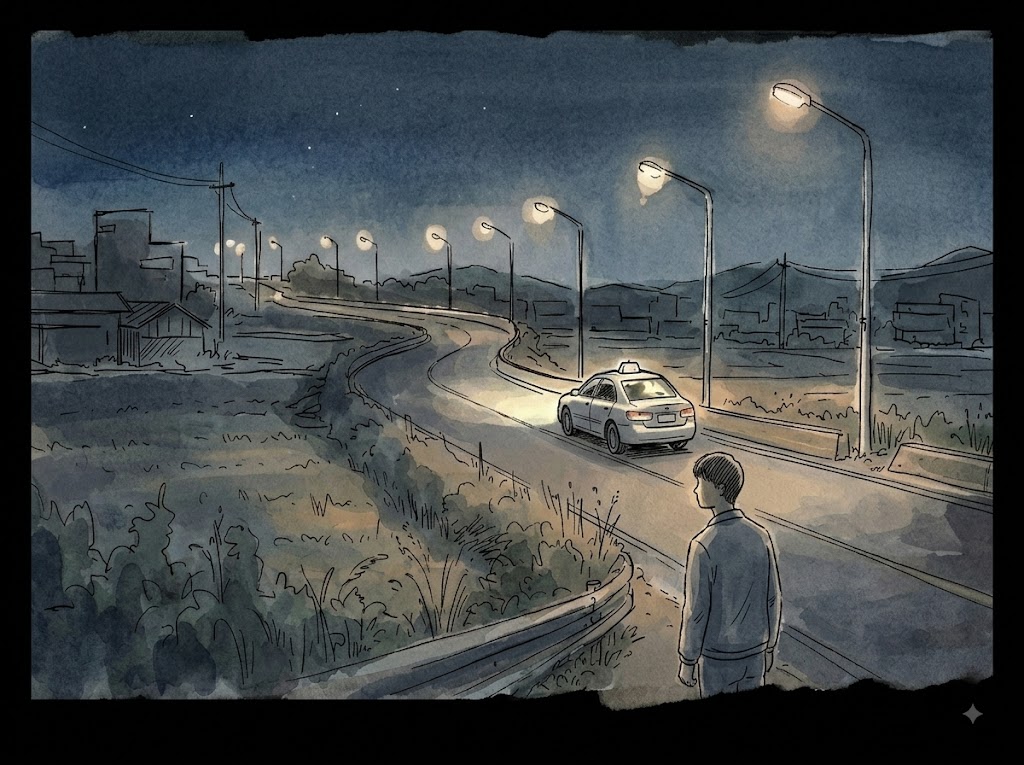 A taxi ride from Seoul to Gangneung, just because he could not stay away.
“How Can Love Change?”
As summer arrives, cracks start to show. Eun-su, who has already been through one divorce, grows distant and hesitant about the relationship’s future. When Sang-woo brings up introducing her to his father, a natural next step in his mind, Eun-su quietly changes the subject instead of answering.
Their breakup produces one of Korean cinema’s most famous exchanges. Eun-su finally says what Sang-woo has been refusing to hear: “헤어져.” “Let’s break up.” Stunned, he asks, “너 나 사랑하니?” “Do you love me?” Then comes the line that would outlive the film itself: “어떻게 사랑이 변하니?” “How can love change?”
What makes the exchange so painful is its order. Eun-su has already arrived at a decision: the relationship is over. Sang-woo’s question comes afterward, not as a reply she is dodging, but as a protest from someone who cannot yet accept the premise of the breakup. She has reached the end of the relationship. He is still trying to understand how an ending like this can even exist.
That exchange became so recognized in Korean culture that it still surfaces in headlines and conversation more than two decades later, often used as shorthand for the pain of loving someone more than they love you back.
The Car Key Scene
The breakup does not end things cleanly. Unable to let go, Sang-woo begins following Eun-su, and eventually trails her to a place where another man is waiting for her. Jealous, humiliated, and consumed by everything he cannot control, he drags his car key along the side of her car, leaving long scratches in the paint.
It is petty, destructive, and deliberately difficult to sympathize with. The film does not try to make it look noble or justified. The scene also complicates our sympathy for Sang-woo. Until this point, he has largely been the wounded, devoted lover. Here, the film allows grief and obsession to push him into behavior that is plainly destructive, a reminder that heartbreak does not always bring out the best in people.
The Flower Pot
Later, in one of the film’s quietest and saddest scenes, Eun-su gives Sang-woo a small potted plant to bring to his grandmother, mentioning that caring for plants is supposed to be good for people with dementia. But Sang-woo’s grandmother has already passed away by this point in the story.
He accepts the plant at first, but on his way out, he turns back and returns it to her. The moment plays out almost entirely without dialogue, yet it says a great deal. The gesture can be read as Sang-woo quietly refusing to restart the relationship. Just as importantly, the gift reveals how far out of sync the two of them have become: Eun-su still pictures the grandmother as someone waiting at home, while Sang-woo has already lived through her death.
The Cherry-Blossom Goodbye
When Eun-su returns the following spring, the two meet one last time beneath blooming cherry blossoms. She tries to draw close again, but Sang-woo ultimately returns the potted plant she once brought for his grandmother, and the two say goodbye for good.
One of the scene’s most memorable details was not originally planned. Director Hur Jin-ho has recalled that the script had Sang-woo and Eun-su part without looking back after their handshake, meant to show that Sang-woo had grown and moved on. But actor Yoo Ji-tae, who had immersed himself deeply in the role, pushed back, arguing that a 26-year-old man like Sang-woo, still carrying those feelings, could not realistically walk away without one last glance. Hur accepted the suggestion, and Sang-woo’s backward glance remained in the final cut.
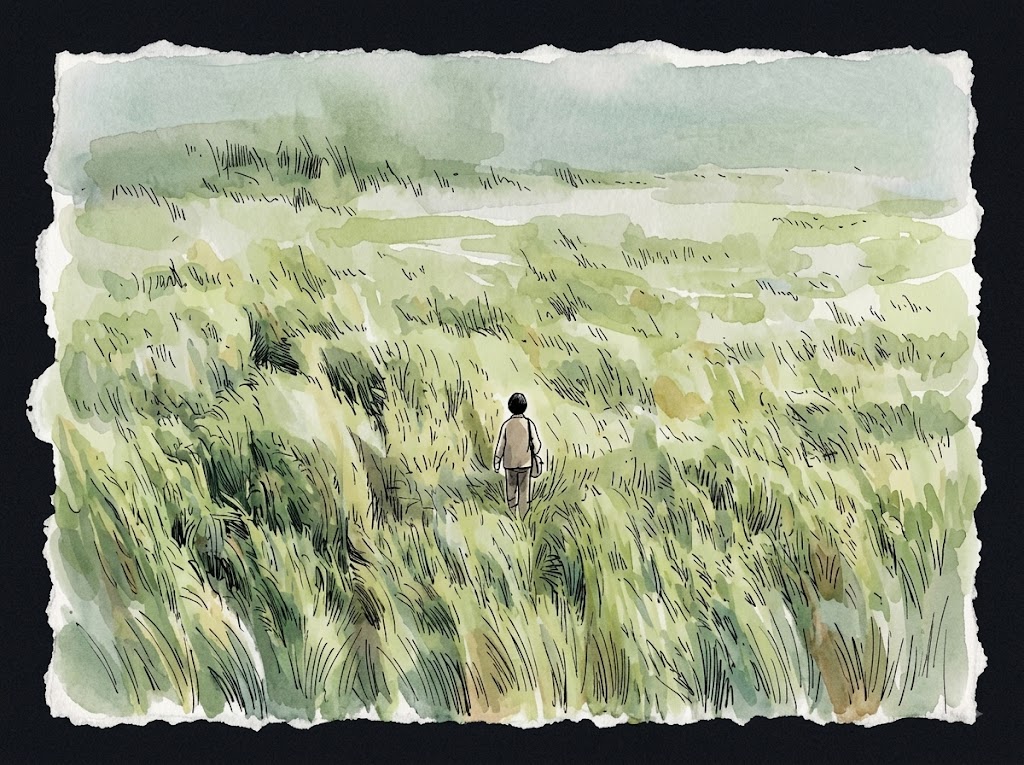
But this cherry-blossom farewell is not quite the film’s final image. Afterward, Sang-woo listens once more to an old recording of Eun-su’s humming, then returns alone to his work, recording the sound of wind moving through a field. The film closes on him there, surrounded by the sounds of nature, finally able to smile, a quiet sign that the love has become memory rather than something he is still trying to recover.
Where to Go From Here
If you love films that use silence and restraint to devastating effect, our deep dive on My Mister explores similar emotional territory. And if you have not yet read it, Part 1 is a good place to start.
Editor’s Rating: 9.3 / 10
Coming up in Part 3: the director, the cast, and the unforgettable music behind this film.
— The Editor