The Way Home (2002): The Silent Grandmother Who Made All of Korea Cry
A deep dive into The Way Home (2002), the quiet Korean classic about a mute grandmother and her spoiled grandson, and the winter night it made me remember.
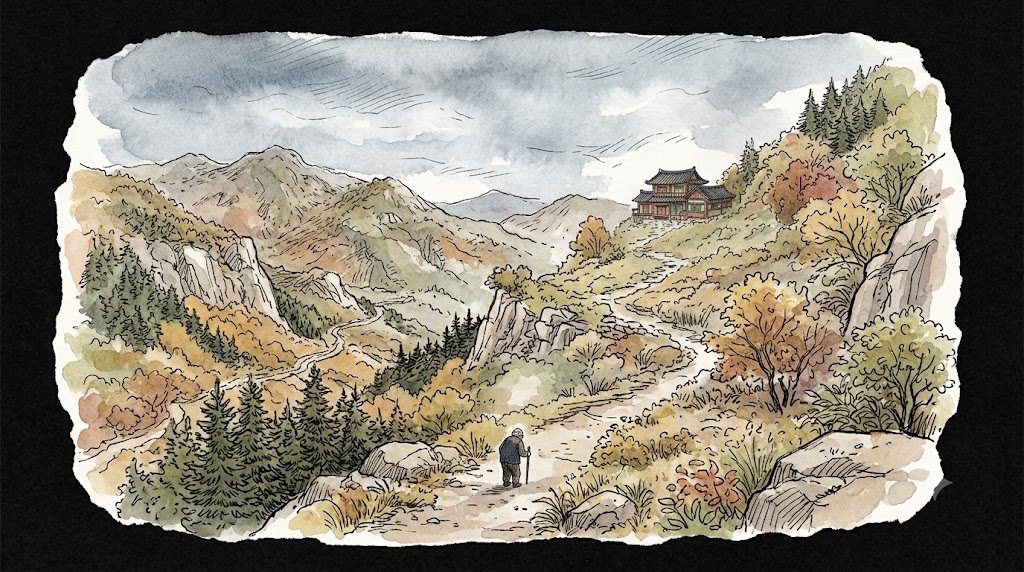
⚠️ Full spoilers. This post talks about the entire story of The Way Home, including the ending.
A personal note from the Editor.
A Movie With No Big Moments
Some movies grab you with explosions or plot twists. The Way Home grabs you with something much smaller. A bowl of soup. A silent old woman threading a needle. A little boy who is, for most of the film, kind of a brat.
That is the whole magic trick of this movie. Nothing “big” happens. And yet, over twenty years later, people still cry at the ending.
The Way Home came out in 2002, directed by Lee Jeong-hyang. It quietly became one of the biggest box office surprises in Korean film history, selling around 4 million tickets and becoming the second-highest grossing Korean film of that year. Today, let’s unpack why this small, gentle story hit so many people so hard.
The Night I Cried in a Theater
I saw this film in a theater when it came out. I went with my girlfriend at the time. I was young, and I very much wanted to look cool.
I did not look cool.
Somewhere in the last third of the movie, something in me simply gave out. It was not a polite tear or two. It was the loud, ugly kind of crying, the kind where your shoulders move and there is nothing you can do about it. In a dark room full of strangers. Next to a girl I was trying to impress.
I was so embarrassed that I still remember the feeling clearly, more than twenty years later.
It took me a while to understand what had actually happened to me in that seat. I was not really crying about a boy and his grandmother. I was crying about my grandfather. I will come back to him at the end of this post.
The Story
Seven-year-old Sang-woo lives in Seoul. He loves video games and fried chicken, and he is, frankly, a little spoiled. When his single mother loses her job, she has no choice but to leave him with his grandmother for the summer, in a tiny, remote mountain village in Yeongdong, North Chungcheong Province.
Sang-woo is furious. His grandmother’s house has no electricity, no running water, and no fast food. Worse, his grandmother cannot speak at all. She is elderly, bent almost in half from a lifetime of hard physical labor, and completely silent.
Sang-woo treats her horribly. He ignores her. He calls her cruel names. He throws tantrums when she cannot give him money for game batteries. At one point, he even steals her only silver hairpin to try to sell it in town.
And through all of it, she never once raises her voice, because she cannot. She simply keeps caring for him anyway.
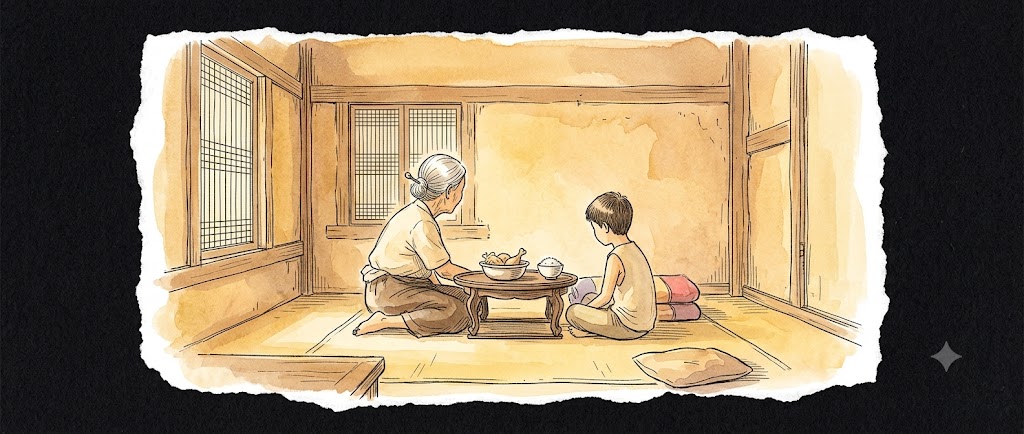
 A woman with no voice, and a boy who refuses to listen.
Slowly, painfully slowly, something shifts. Sang-woo starts to notice the quiet ways his grandmother shows love. She walks to the market with wild greens on her back, sells them, and spends the money on him — a pair of sneakers, a bowl of black bean noodles he slurps down while she sips only water. Then she asks him, again and again, if there is anything else he wants.
The Scene That Broke Me
Late in the film, Sang-woo plays a mean prank on Cheol-i, the neighbor boy. He yells that a crazy cow is charging up the hill. Cheol-i panics and falls, and Sang-woo thinks it is hilarious.
Then the joke comes back around. A real cow really does come after Sang-woo. He runs, he trips, and he hurts himself badly enough to limp. His grandmother hurries to him as fast as her bent back will allow. She wipes his face and holds him. She cannot offer him a single word of comfort.
After that long, awful day, Sang-woo drags himself home. And that is when he finds it. Tucked under his game console, folded and folded again into a tight little square: two thousand-won bills.
Weeks earlier, he had whined at her for battery money. He had screamed about it. She could not answer him, and she could not read the label on a battery pack if she tried. But she had remembered. She had earned that money bent over in a field and standing at a market stall. And she had hidden it under the exact toy that had caused her so much trouble.
Two thousand won. About two dollars. A grandmother’s entire vocabulary, in cash.
That is the moment I lost it in the theater.
By the time his mother finally returns to take him back to Seoul, Sang-woo has changed. He teaches his grandmother to draw simple pictures so she can “write” him letters, since she cannot read or write either. As the bus pulls away, he runs to the back window, crying, waving at the grandmother he once treated so cruelly.
The film ends with her walking back over the hill, alone again, holding onto the only connection she has left to him.
Why the Silence Is the Whole Point
The grandmother never speaks a single word in this entire movie. That was not a small creative choice. Director Lee Jeong-hyang has said in interviews that she made the grandmother mute because the character was meant to represent nature itself. Nature does not argue. It does not explain itself. It simply exists, and gives, quietly, over and over again.
That idea reframes the whole film. Sang-woo represents the modern, noisy, demanding world. He always wants something: batteries, fried chicken, attention. His grandmother represents something older, something that gives without needing anything back.
Their relationship is really a small stand-in for a bigger idea: the gap between a fast, convenience-driven modern life and a slower, harder, more patient older way of living. The film never lectures you about this. It just lets you sit with the two of them, side by side, until you feel it yourself.
The Real Grandmother Behind the Role
Here is a detail that makes the film even more remarkable. The actress who played the grandmother, Kim Eul-boon, was not an actress at all. She was a real farmer in her late 70s from Yeongdong County, discovered by the director while she was working in her own fields. She had never acted before. She had never even seen a movie before taking the role.
That lack of performance is exactly what makes her so devastating to watch. She is not acting silence. She simply carries herself the way a lifetime of hard, rural labor actually shapes a person. Her performance later earned her a nomination for Best New Actress at Korea’s Grand Bell Awards, making her one of the oldest nominees in the award’s history.
Kim Eul-boon passed away in 2021 at the age of 95. Her family said she always spoke fondly of her time making the film, right up until the end.
Editor’s Note: The Path My Grandfather Cleared
A personal note from the Editor.
The person I thought about in that dark theater was not a grandmother at all. It was my grandfather.
He was quiet in the way that so many Korean men of his generation were quiet. He did not explain himself. He did not say warm things out loud. I can barely remember having a real conversation with him. What I remember is his back, always a few steps ahead of me.
One winter night, when I was small, my mother and I took a late train out to the countryside. We got off the bus near his village long after dark. Snow had been falling all day, and it lay soft and deep over everything.
He was standing at the stop, waiting for us. He had a shovel in one hand.
He looked at the two of us. He nodded, twice. Then he turned around and started walking. That was the entire greeting. No hug. No “you must be freezing.”
The night should have been pitch black, but all that snow held a little light, so it never felt truly dark. I walked behind him, holding my mother’s hand. He walked ahead with his hands folded behind his back, the way old men do.
Then I noticed something.
Snow covered the whole world. The fields, the rooftops, the fences, the hills — all of it white. But the path under our feet was completely bare.
He had come out early, alone, in the cold and the dark. He had shoveled the snow off the entire stretch of road we were going to walk on. Then he had stood at the bus stop holding that shovel, and when we arrived he said nothing about it at all.
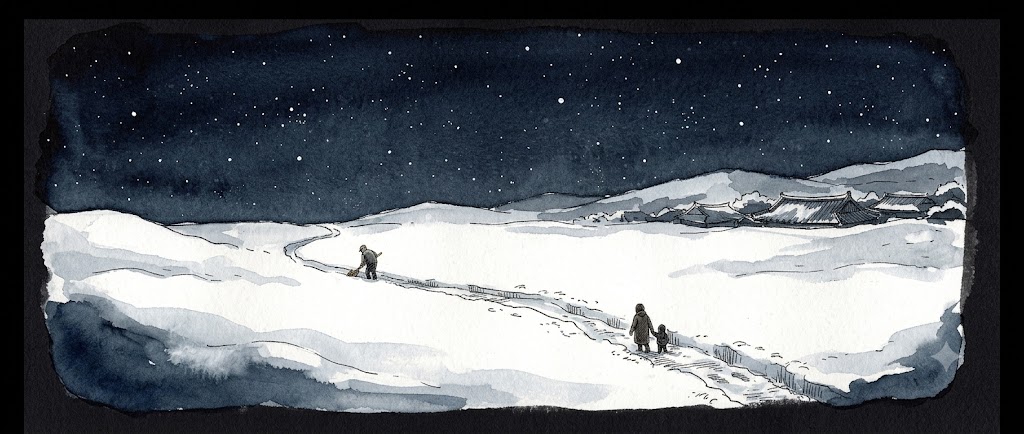 A path swept clean, and not one word about it.
It was a bitterly cold night. But that memory has stayed warm in me for my whole life. Maybe it was the stars, stitched thick across the winter sky. Maybe it was my mother’s hand in mine. Maybe it was the sound of our shoes hitting bare ground instead of snow.
Or maybe it was simply this: love that never announces itself, and never once asks to be noticed.
That is exactly what The Way Home is about. A grandmother who cannot speak still finds a way to say everything. And that is why a mountain village in a movie from 2002 made a young man sob in a theater seat, in front of a girl he liked, with no warning at all.
She was doing what my grandfather did with a shovel.
A Small Film That Became a Giant
The Way Home was never expected to be a hit. It had no star-studded cast, no special effects, and a real farmer instead of a professional actress in the lead role. And yet it went on to outperform many bigger, flashier films that year.
It also became the first Korean film to receive wide theatrical distribution from a major Hollywood studio in the United States, and it won Best Picture and Best Screenplay at the 39th Grand Bell Awards, one of South Korea’s most respected film honors.
Its success proved something important about Korean audiences: a quiet, patient story, told honestly, can beat almost anything for sheer emotional impact.
Where to Go From Here
If understated, deeply emotional Korean storytelling is your thing, our deep dive on My Mister explores similar themes of quiet kindness between generations.
For another story about grandparents, memory, and a place that shapes the people in it, try our look at Tangerines, set across decades on Jeju Island.
And if you want a warm, funny Korean film that sneaks up on you the same way, our Hidden Gems piece on Hello Ghost is a good place to start. You can also see where films like this sit against the country’s biggest hits in our Korean Movies TOP 10 rundown.
Editor’s Rating: 9.0 / 10
— The Editor